
What if the “bargain” quote you received to clean your historic timbers actually ends up costing you thousands in structural repairs? It is a common fear for period property owners who want to strip away layers of black bitumen without “furring” the irreplaceable oak beneath. We know you want to reveal the natural beauty of your home whilst ensuring its long-term value is protected, not compromised by aggressive techniques. This guide breaks down the cost to restore Tudor beams UK in 2026, providing the transparency you need to compare specialist quotes with confidence. You will learn how to identify sympathetic, low-pressure methods that respect the wood’s patina. We will also explain why our team, established in November 2000, often recommends traditional dry grit blasting over more expensive options like dry ice, ensuring your restoration is both authentic and cost-effective.
Key Takeaways
- Identify the primary cost drivers, from the intricate carvings of your timber framing to the removal of stubborn, modern gloss paints and historic bitumen.
- Compare restoration methods to find the safest fit, such as using the gentle Sand Jet (originally the Farrow System) for external work or low-pressure dry grit blasting for internal beams.
- Recognise the hidden risks of low-cost blasting and chemical strippers that can permanently “fur” the wood grain and compromise the authentic look of your home.
- Navigate the 2026 market with confidence by understanding the typical cost to restore Tudor beams UK and why investing in “gentle” specialist methods prevents expensive future repairs.
Primary Cost Drivers for Tudor Beam Restoration in the UK
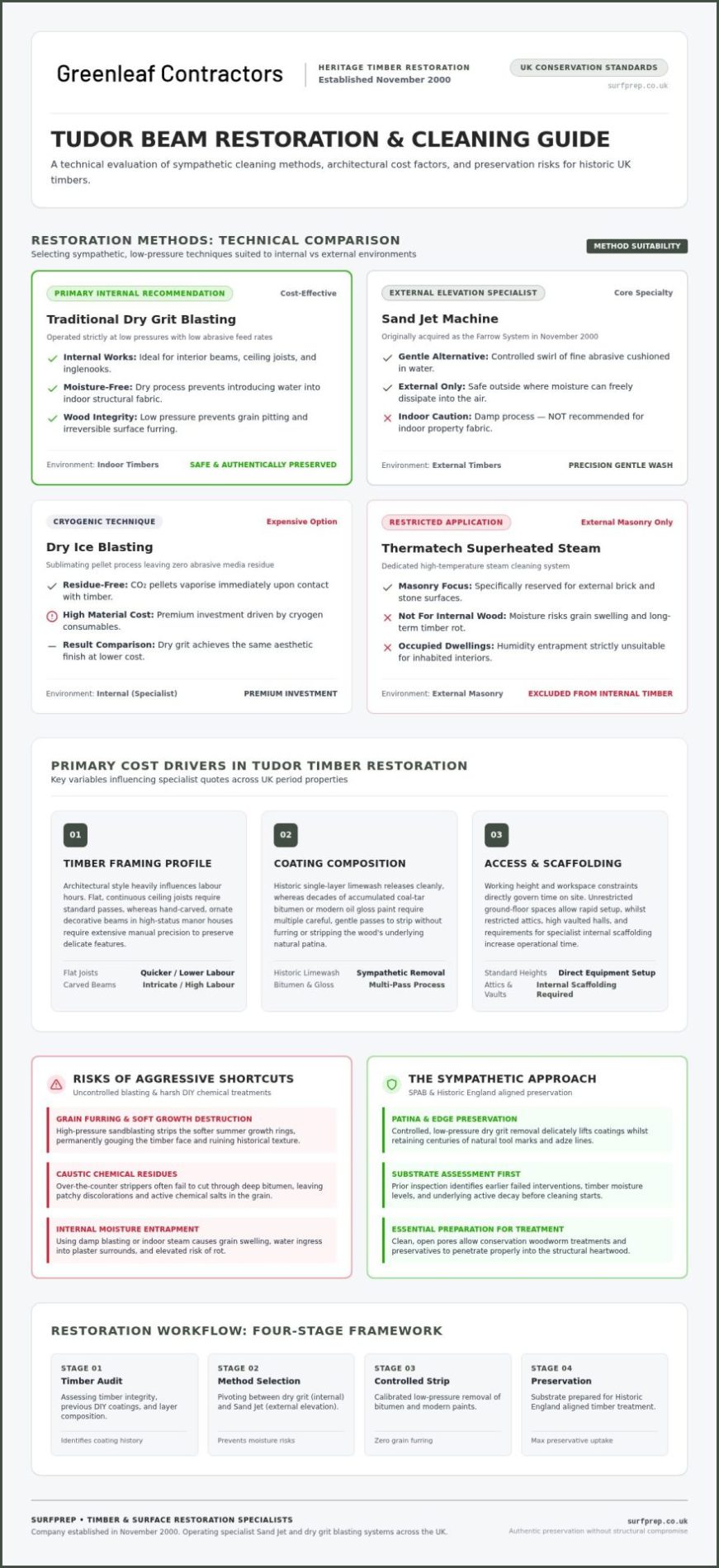
Understanding the cost to restore Tudor beams UK requires looking beyond just the length of the timber. The architectural style of the traditional timber framing dictates the labour involved; for instance, flat joists are far quicker to clean than intricate, hand-carved decorative beams found in high-status manor houses. Accessibility also plays a significant role in the final quote. Working in cramped attic spaces or requiring specialist internal scaffolding increases time on site, which naturally impacts the overall investment. It’s rarely a “one size fits all” process.
The choice of restoration method also balances speed against preservation. While we aim for efficiency, the priority is always the integrity of the wood. We often see quotes vary based on whether a contractor plans to use aggressive, high-pressure equipment or the more controlled, low-pressure dry grit blasting we’ve championed for specialist beam cleaning since November 2000. Choosing the cheapest method often leads to hidden costs later if the timber surface is damaged beyond repair.
Evaluating Timber Condition and Coating Layers
Coating history is a major variable when calculating the cost to restore Tudor beams UK. A single layer of historic limewash behaves very differently to decades of thick, modern gloss paint or stubborn, coal-tar bitumen. Multiple layers require more passes with gentle abrasives to avoid “furring” the grain or losing the wood’s natural patina. We also account for previous DIY attempts; if a homeowner has tried caustic strippers, they often leave behind chemical residues or patchy finishes that complicate the professional cleaning. Before we start, we assess the timber’s integrity to determine the exact low-pressure settings required for a safe, sympathetic result.
Comparing Restoration Methods: Sand Jetting vs Dry Grit Blasting
Selecting the right technique is the most critical decision affecting the cost to restore Tudor beams UK. Since November 2000, we’ve utilised the Sand Jet (originally the Farrow System) as a gentle alternative to aggressive sandblasting. This method uses a controlled swirl of fine abrasive cushioned in water, making it perfect for external timbers where moisture can dissipate. For internal restoration, we pivot to traditional dry grit blasting at low pressures. This approach is highly cost-effective and prevents the “pitting” of the wood grain that high-pressure industrial systems often cause.
Dry ice blasting is another option we provide, though it’s clearly an expensive choice due to the high cost of cryogen consumables. Whilst it leaves zero residue, most homeowners find dry grit blasting achieves the same aesthetic result for a fraction of the investment. We also use the Thermatech machine for superheated steam cleaning, but we strictly reserve this for external masonry. Using steam on internal wood, especially in occupied houses, risks grain swelling and moisture entrapment that can lead to rot.
Internal vs External Wood Cleaning Considerations
The distinction between internal and external environments is non-negotiable. We never recommend the Sand Jet for indoor use because it is a damp process; introducing water into a property’s structural fabric can lead to long-term damp issues. Instead, we use low-pressure dry grit to safely remove bitumen or paint whilst following SPAB guidance on timber frames to ensure heritage conservation. If you’re working on a larger renovation, you might find our guide on restoring structural timbers in barn conversions helpful for understanding the specific workflow. For external elevations, our specialist sand jet cleaning remains the industry standard for gentleness and precision.
Budgeting for Professional Restoration: Avoiding Costly DIY Mistakes
The allure of a low-cost DIY fix or a “cheap” sandblasting contractor often masks significant hidden risks. Aggressive blasting can permanently damage the soft summer growth of the wood, leaving a “furred” texture that destroys the authentic patina. Chemical strippers are equally problematic; they often struggle with deep bitumen or multiple paint layers, resulting in a patchy, uneven finish that requires professional intervention anyway. When you factor in the potential loss of heritage value, the true cost to restore Tudor beams UK becomes much higher if the job isn’t done correctly the first time.
A clean surface is also a vital precursor to effective woodworm treatment. Removing old coatings allows preservatives to penetrate the timber properly. Following Historic England timber treatment advice, we focus on managing moisture and identifying active decay before any chemical application. For those preparing a period property for sale, professionally restored beams provide a significant return on investment, often becoming a primary selling point that justifies a higher asking price whilst lowering the future cost to restore Tudor beams UK through proper maintenance.
The Specialist Advantage: Integrity and Transparency
Established in November 2000, we’ve spent over two decades refining our “gentle” approach across Leeds, York, and Hull. We believe in the “Expert Admission”; we’ll tell you if a specific method isn’t suitable, even if it means suggesting a different approach. For instance, whilst we love the results of our Thermatech machine on stone, we’ll advise against using it on internal wood to protect your home’s fabric. We encourage you to contact us for a bespoke site survey across the North to ensure your restoration is handled with the precision it deserves.
Preserving Your Home’s Historic Character
Restoring historic timbers is an investment in both the aesthetic and the structural integrity of your home. By understanding the primary drivers behind the cost to restore Tudor beams UK, you can avoid the pitfalls of aggressive, low-cost blasting that often leads to permanent grain damage. Whether we’re using our specialist Sand Jet (originally the Farrow System) for external elevations or low-pressure dry grit for internal joists, our focus remains on sympathetic preservation. Established in November 2000, our team brings over two decades of expertise to every project across Leeds, York, and Hull. We prioritise transparency, ensuring you choose a method that respects the wood’s heritage whilst adding tangible value to your property. Ready to transform your historic timbers? Request a Professional Beam Restoration Quote from Surfprep today. We look forward to helping you reveal the natural beauty of your home safely.
Frequently Asked Questions
Is sandblasting Tudor beams messy?
Dry grit blasting is a dusty process, so we take extensive measures to protect your home. In properties across Leeds and York, we use heavy-duty polythene masking and industrial-grade vacuum extraction to contain the media. Whilst it’s impossible to eliminate all dust, our methodical setup ensures the mess is managed and the site is left clean and tidy.
Can you lighten dark oak beams without using chemicals?
We lighten dark oak beams by physically removing old coatings rather than bleaching them. Using low-pressure dry grit blasting, we strip away layers of black bitumen and modern gloss paint to reveal the natural grain underneath. This mechanical process avoids the risks associated with caustic chemicals, which can seep into the wood and cause permanent damage or salt efflorescence.
How long does it take to restore the beams in a standard room?
A standard room in a period property usually takes between one and two days to complete. This timeframe includes the essential masking of floors and walls, the actual cleaning process, and a thorough site vacuuming. Factors like the complexity of the timber framing and the thickness of the coatings will influence the exact duration and the final cost to restore Tudor beams UK.
What is the difference between DOFF and Thermatech for wood?
DOFF is a widely recognised brand name, but we specifically utilise the Thermatech machine for superheated steam cleaning. Both systems achieve similar results on external masonry, but our “Expert Admission” is that we rarely recommend steam for internal wood restoration. The moisture can saturate the grain and damage surrounding plasterwork, especially in occupied houses in Hull or Manchester.
