
Aggressive sandblasting is often the fastest way to permanently ruin a commercial façade. Many property managers learn this the hard way after seeing pitted brickwork and blown mortar joints that look far worse than the original city centre pollution. If you’re currently staring at stubborn carbon sulphation or the unsightly white streaks of efflorescence on a newer build, you’re likely feeling the pressure to act quickly. However, choosing the right commercial brick cleaning services isn’t just about aesthetics; it’s about protecting the structural integrity of your asset for the long term (and avoiding a difficult conversation with a conservation officer).
We understand that the balance between a professional looking exterior and strict HSE requirements can feel like a minefield. This specialist guide will show you how to safely remove pollutants and restore your masonry using industry leading UK standards that prioritise material safety over aggressive speed. We’ll preview the most effective restoration methods, such as superheated steam and gentle abrasive systems, whilst explaining how to stay compliant with the 2026 GB CLP hazard standards and the new mandatory DEFRA digital waste tracking requirements.
Key Takeaways
- Identify the specific vulnerabilities of your masonry by distinguishing between city centre carbon fallout and salt-based efflorescence before any work begins.
- Compare the technical benefits of superheated steam versus gentle abrasive techniques to find the safest restoration method for your building’s unique condition.
- Ensure your project remains fully compliant with the 2026 GB CLP hazard standards and new DEFRA digital waste tracking rules for site runoff.
- Learn why professional commercial brick cleaning services prioritise a pre-work porosity test and site survey to prevent irreversible damage to the brick face.
- Understand the commercial impact of façade restoration on tenant retention and why comprehensive RAMS are essential for any UK-based site work.
Identifying Commercial Brick Contaminants and Material Vulnerability
Professional commercial brick cleaning services involve more than just a quick blast with a hose. It’s the technical removal of atmospheric deposits, organic matter, and construction debris that has fused with the masonry over decades. In cities like Leeds and Manchester, traffic-derived carbon fallout is the primary culprit. These particles don’t just sit on the surface; they react with the calcium carbonate in the mortar and brick to form a gypsum crust. This chemical change makes the soot incredibly difficult to shift without the right equipment.
Here is an expert admission that most general contractors won’t share: using high pressure is often a mistake. Whilst it provides a fast visual result, it forces water deep into the substrate. This trapped moisture often leads to internal damp or "spalling" when the temperature drops and the water freezes. We also frequently see efflorescence on newer commercial developments across the UK. This unsightly white salt staining occurs when moisture brings internal salts to the surface; it requires a specific chemical approach rather than brute force.
Regional Pollution Factors: From Industrial Fallout to Coastal Salt
Heavy carbon staining in Northern industrial hubs creates a thick "black crust" that traps moisture against the brick face. Over time, this crust can crack and pull away the original surface of the masonry. The challenges change as you move toward the coast. Properties in Grimsby or Scarborough face salt-air corrosion, where chloride ions accelerate the decay of both the brick and the mortar joints. Neglected carbon deposits on commercial masonry can lead to deep-seated sulphation, which weakens the brick’s structural integrity over time.
Masonry Material Check: Period vs. Modern Brickwork
Understanding your building’s history is vital for a safe result. Victorian engineering bricks are incredibly dense and require a different approach compared to modern flettons or hand-made period bricks. Any professional brick cleaning must respect the original kiln-fired skin of the brick. If you strip this protective layer away through aggressive methods, the brick becomes porous and will degrade rapidly.
This material sensitivity is even more pronounced during stone restoration, which often requires pH-neutral considerations that differ from clay-based treatments. In many cases, cleaning is the final stage of a broader project, such as the restoration process of repointing, where the goal is to ensure the new mortar blends seamlessly with the original, cleaned masonry. Getting the chemistry right at this stage prevents the "patchy" look that ruins the professional aesthetic of a commercial property.
Professional Brick Cleaning Methods: Superheated Steam vs. Abrasive Techniques
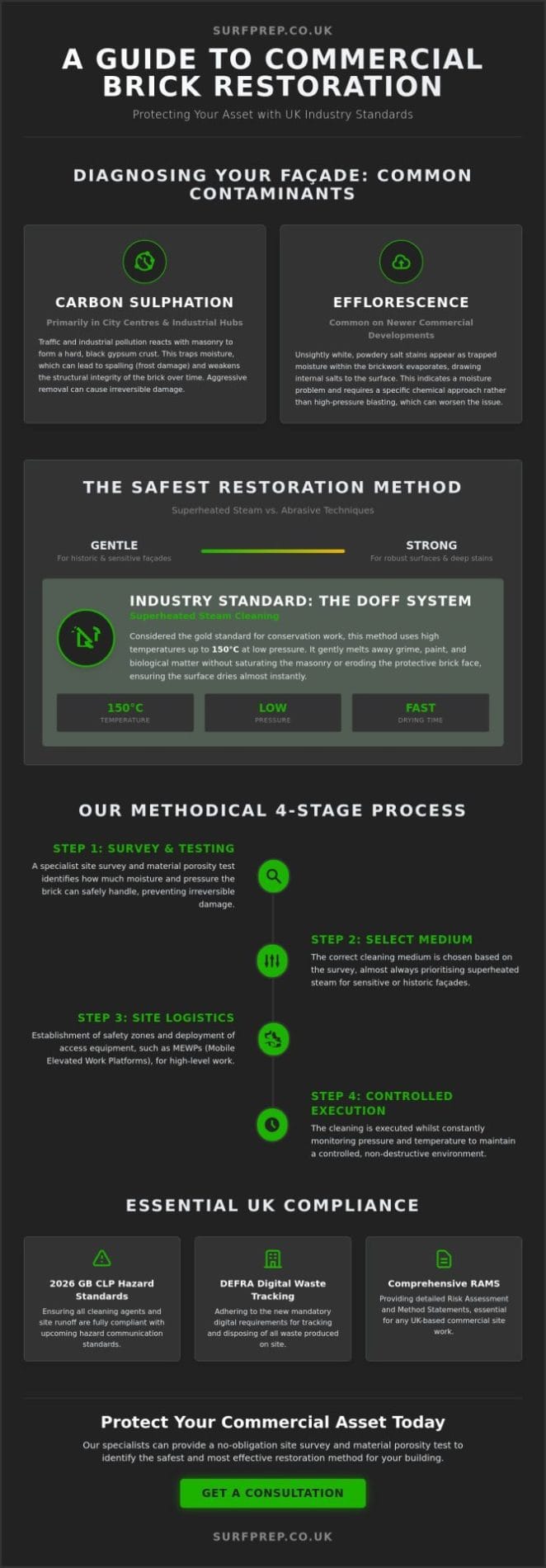
Effective commercial brick cleaning services follow a methodical, four-stage process to ensure the building’s longevity. We start with a specialist site survey and material porosity test; this identifies exactly how much moisture or pressure the brick can safely handle without eroding the face. Next, we select the cleaning medium, often prioritising superheated steam for sensitive or historic façades to prevent surface damage. Logistics follow, where we establish site safety zones and deploy access equipment, such as MEWPs (Mobile Elevated Work Platforms) or full scaffolding, for high-level work. Finally, we execute the cleaning whilst constantly monitoring pressure and temperature to maintain a controlled, non-destructive environment.
Why Superheated Steam (DOFF) is the Industry Standard
The science behind superheated steam cleaning is simple but highly effective. By reaching temperatures of 150°C at the nozzle, the system melts through grease, bitumen, and organic matter without the need for high pressure. This is a critical distinction from traditional jet washing. High-pressure water often leads to ‘saturated wall’ syndrome, where moisture remains trapped in the masonry for weeks. Because the superheated steam systems uses low volume and high heat, the surface dries almost instantly. This method aligns with global best practices, such as the Historic Masonry Cleaning Guidelines, making it the preferred choice for conservation officers overseeing listed commercial buildings in the UK.
When to Use Specialised Abrasives: The Sand Jet System
There are instances where steam alone isn’t enough, particularly when dealing with heavy paint layers or stubborn industrial coatings. In these cases, sand jet cleaning provides a controlled alternative. Unlike aggressive traditional sandblasting, this system uses a low-pressure, swirling abrasive action that gently lifts the coating. Precision abrasive cleaning should only be utilised when non-destructive steam methods cannot penetrate heavy surface coatings. If you’re unsure which method suits your property, you can request a technical site assessment to determine the safest route forward for your façade.
Managing Commercial Restoration: Regulations, ROI, and Specialist Selection
Investing in professional façade restoration is a strategic move for any property owner. Beyond the immediate visual lift, improving business curb appeal has a measurable impact on tenant retention and overall property valuation. A clean, well-maintained exterior signals a well-managed asset, often allowing for higher lease rates compared to neglected neighbouring blocks. For those managing multi-unit developments, understanding the specific demands of retail park facade maintenance is essential to protecting both tenant satisfaction and long-term asset value. From a structural perspective, preventative maintenance is far more cost-effective than emergency repairs. By removing aggressive pollutants early, you avoid the accelerated decay that eventually necessitates expensive structural interventions or full-scale brick replacement. Understanding how to budget for cyclical property maintenance is therefore essential for any property manager looking to shift from reactive spending to a planned, long-term preservation strategy.
Logistical competence is what separates a general cleaner from a specialist. For any UK commercial project, we prioritise the production of detailed RAMS (Risk Assessments and Method Statements). These documents aren’t just a box-ticking exercise; they’re the blueprint for a safe, efficient site. Whether we’re working on a retail park or a high-rise office block, our approach remains methodical. As a reliable veteran of the industry, Surfprep has the capacity to handle large-scale commercial brick cleaning services across the North of England, ensuring that every project meets the highest operational standards.
UK Safety Standards and Environmental Compliance
Compliance is the cornerstone of our service. We strictly adhere to the Work at Height Regulations 2005, ensuring all operators are IPAF-trained for the safe use of access platforms. Environmental protection is equally critical. We manage all chemical runoff and greywater in accordance with UK water authority guidelines to prevent drainage contamination. For peace of mind on major contracts, we maintain public liability insurance of £10m, which is the standard requirement for high-value commercial masonry projects.
Selecting a Specialist Contractor: What to Ask
When vetting a contractor, look for demonstrated experience in both modern and heritage masonry restoration. A specialist should be able to provide ‘before and after’ case studies that reflect the specific challenges of your building type. Don’t be afraid to ask about their equipment maintenance schedules or their specific plan for water reclamation. If you’re ready to restore your property’s professional image, you can contact Surfprep for a specialist site assessment. We regularly support clients with major projects in York, Manchester, and Newcastle, providing the technical expertise required for complex façade restoration.
Future-Proofing Your Commercial Façade
Restoring a commercial building is a long-term investment that requires a careful balance between aesthetic appeal and structural preservation. By prioritising non-destructive methods like superheated steam or low-pressure abrasives, you ensure that your masonry remains healthy whilst meeting the strict environmental and safety standards required in 2026. Successful restoration always begins with a technical understanding of the substrate, whether you’re managing a heritage landmark or a modern office block.
Surfprep has been a dependable partner for large-scale projects since 2000. We specialise in thermatec superheated steam and our tried and tested sand jet technology, serving commercial clients across Leeds, Manchester, and the North. Our team consists of fully insured, IPAF and PASMA certified operators who understand the logistical complexities of high-level commercial brick cleaning services. We don’t just clean surfaces; we provide a methodical path to protecting your building’s structural integrity.
Request a professional masonry assessment from the Surfprep team today to secure the future of your property’s exterior. We’re ready to help you restore your building’s professional character with precision and care.
Frequently Asked Questions
Will professional brick cleaning damage the mortar joints of my building?
Professional cleaning won’t damage mortar joints if the correct method is selected for your specific masonry type. We prioritise superheated steam at low pressure which removes surface grime without the mechanical force that causes erosion. If we identify that your mortar is already failing or "soft", we’ll suggest a localized repair before proceeding to ensure the wall remains watertight and structurally sound.
How long does a commercial brick cleaning project typically take in the UK?
Most medium-sized commercial projects in the UK take between three to five working days, though this varies based on building height and accessibility. A single street-level retail frontage might be completed in a day, whilst a multi-storey office block requires more time for scaffolding or MEWP setup. Weather conditions and the severity of carbon staining also play a significant role in the daily progress rate.
Can you remove graffiti from commercial brickwork without ghosting?
How much do commercial brick cleaning services cost per square metre in 2026?
The cost for commercial brick cleaning services in 2026 is determined by several project-specific factors rather than a flat rate. These include the total surface area, the height of the building, and the specific contaminants involved, such as heavy bitumen or industrial soot. Additional costs often arise from necessary site requirements like RAMS production, water reclamation systems to meet DEFRA standards, and the type of access equipment needed for safe operation.
