
Maintaining the exterior of a commercial property is more than a simple cleaning task; it’s a critical investment in your brand’s reputation, the building’s structural integrity, and public safety. For property managers and business owners across the North of England, the challenge lies in tackling decades of atmospheric soiling, biological growth, and urban pollution without causing irreversible damage to the underlying masonry. This guide explains the professional approach to commercial building facade cleaning services, ensuring your asset is not just cleaned, but expertly restored.
Why Your Commercial Building Facade Requires Specialist Cleaning
A pristine facade does more than just look good. It’s a direct reflection of the standards you uphold within your business. For clients, stakeholders, and staff, a well-maintained exterior communicates professionalism and attention to detail before they even step through the door. However, the benefits of professional cleaning run much deeper than aesthetics.
- First Impressions: A clean, well-kept exterior is a powerful statement, communicating high professional standards and pride in your business to potential clients, tenants, and partners.
- Structural Preservation: Contaminants like algae, moss, and lichen trap moisture against brick and stone. This persistent dampness accelerates decay, compromises mortar joints, and can lead to significant structural issues over time.
- Pollutant Removal: In city centres like Manchester and Leeds, decades of traffic fumes and industrial pollutants form hard, black “carbon crusts.” These acidic deposits actively eat away at delicate masonry and cannot be removed with cold water alone.
- Legal and Safety Obligations: Property owners have a duty of care to ensure their buildings are safe for the public. Regular facade maintenance prevents loose debris, masonry fragments, or dislodged growth from falling onto pavements and posing a risk to pedestrians.
The Cost of Neglect: Beyond Aesthetics
Postponing professional facade cleaning is a false economy. When biological growth and pollutants are left unchecked, they create a cycle of decay that is far more expensive to fix than to prevent. Moisture trapped by algae and grime can lead to spalling brickwork and crumbling stone, necessitating costly interventions like repointing or full stone replacement. Furthermore, the presence of graffiti can devalue a property and contribute to the “broken window” effect, a psychological signal that an area is not well-maintained, potentially deterring customers and attracting further vandalism. (Exterior building cleaning)
Identifying Common Contaminants in Northern UK Environments
The North of England presents a unique set of environmental challenges for commercial properties. Our rich industrial history, combined with a damp climate, creates a perfect storm for facade degradation. Key contaminants include:
- Atmospheric Soiling: A combination of carbon, sulphur, and nitrogen oxides from historical industry and modern traffic that forms stubborn, dark staining on urban buildings.
- Organic Growth: The damp, temperate climate, particularly in regions like East Yorkshire and the North East, encourages the growth of green, black, and red algae, as well as moss and lichens, especially on north-facing elevations.
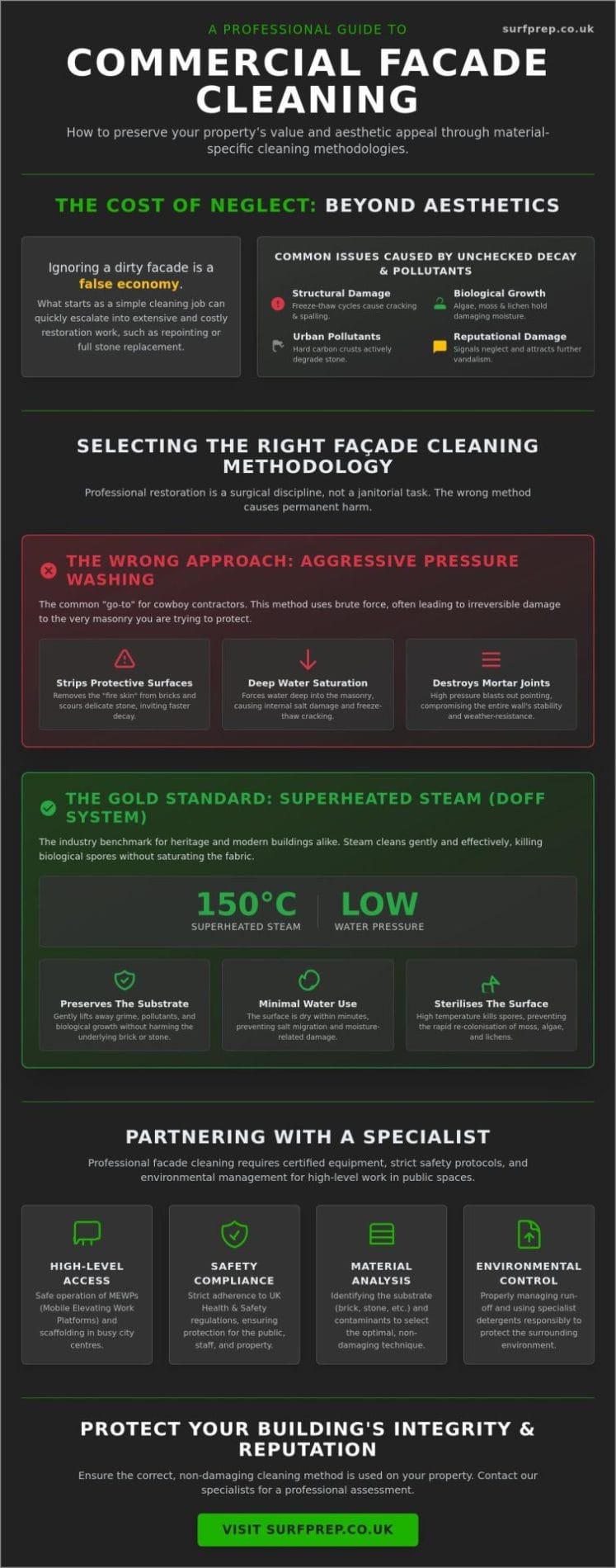
Selecting the Right Facade Cleaning Methodology for Brick and Stone
Effective commercial facade cleaning is not a one-size-fits-all service. Choosing the wrong method can be disastrous, causing permanent damage to historic brick or delicate stonework. A true specialist assesses the building’s material, age, and the type of soiling to prescribe the safest and most effective treatment. The “Expert Admission” in our industry is that high-pressure cold water washing is often the worst choice for anything other than hard, modern surfaces, as it can shatter brick faces and saturate walls.
- Superheated Steam (Doff) Cleaning: The gold standard for heritage and delicate masonry, using high temperatures (up to 150°C) but very low pressure to melt away contaminants.
- Controlled Abrasive (Sand Jet) Cleaning: A gentle, precise system that uses a fine abrasive in a low-pressure vortex, ideal for removing specific coatings or stubborn soiling without damaging the substrate.
- Grit Blasting and Abrasives: A more aggressive method reserved for heavy-duty industrial surface preparation, such as removing thick paint from steel structures or preparing concrete for new coatings.
- Chemical Cleaning: The targeted application of specialist, pH-neutral or alkali detergents to treat specific issues like metallic staining (e.g., copper run-off) or graffiti shadows.
Superheated Steam: The Gold Standard for Masonry
The Doff system is trusted by conservation bodies for a reason. It uses superheated steam from a standard water supply, reaching temperatures of 150°C at the nozzle. This high heat melts away grime, paint, and biological matter, whilst the low pressure ensures the surface of the brick or stone is not eroded or damaged. Because it uses minimal water, the substrate is not saturated and dries within minutes, preventing moisture ingress. This makes it the perfect solution for stone cleaning on listed buildings in heritage-rich cities like York. In short, Doff cleaning is a chemical-free, pH-neutral process that kills spores to prevent the rapid regrowth of algae. (OSHA safety standards)
Controlled Abrasive Cleaning: The Sand Jet System
For situations where steam alone may not be enough, but aggressive blasting is too much, the sand jet system provides a perfect balance. This technology uses a swirling, low-pressure vortex of air, water, and a very fine, inert abrasive. It offers remarkable precision, allowing our technicians to gently lift stubborn paint layers, carbon deposits, or lime wash from robust brickwork without the pitting or damage associated with traditional sandblasting. It’s a controlled, targeted approach for when a little more cleaning power is required.
Abrasive Cleaning and Industrial Surface Preparation
When dealing with heavily painted steelwork, industrial coatings, or preparing concrete for a new finish, a more robust approach is necessary. Our industrial surface preparation services utilise carefully selected abrasive media to strip surfaces back to their original state. The key is balancing aggression with precision; our experienced teams ensure the underlying substrate remains intact and ready for its next application, whether it’s a factory floor or a commercial steel frame.
Partnering with a Specialist: Safety, Standards, and the Surfprep Approach
Choosing a contractor for commercial building facade cleaning services involves more than just their cleaning technology; it’s about trusting their professionalism, safety protocols, and project management capabilities.
- Health and Safety at Height: We are experts in navigating the complexities of high-level access. From operating MEWPs (Mobile Elevated Work Platforms) and erecting scaffolding to managing pedestrian traffic in busy public areas, safety is our first priority.
- Environmental Responsibility: In busy city centres, managing run-off and protecting the local environment is crucial. Our use of superheated steam minimises water usage and eliminates the need for harsh chemicals, making it an eco-friendly choice.
- The Surfprep Difference: We combine the grit, experience, and can-do attitude of a veteran contractor with investment in the latest advanced restoration technology. We are honest specialists, not general cleaners.
- Case Study Logic: Our track record speaks for itself. We transform weathered, tired-looking commercial properties into pristine, high-value assets for clients across the North of England.
Navigating Regulations and Listed Building Consent
Working on protected or historic buildings requires a delicate touch and a thorough understanding of conservation law. We frequently collaborate with Conservation Officers to develop a scope of works that meets their stringent requirements, particularly for specialist brick cleaning in protected areas like Beverley or Durham. Our commitment is to ensure all work not only looks exceptional but also fully complies with the rigorous standards expected of professional facade restoration. (NPS guidelines on historic masonry cleaning)
Comprehensive Coverage Across the North of England
From our base in East Yorkshire, Surfprep has the logistical capability and technical expertise to serve major commercial hubs from Newcastle and Leeds to Manchester, Nottingham, and Derby. We thrive on complex projects and bring a problem-solving attitude to every site. Our expertise extends beyond exteriors, including intricate jobs like the restoration of period commercial interiors through specialist wooden beam cleaning.
Ready to restore your property’s professional image and protect its value? Contact the Surfprep team today for a specialist assessment.
Frequently Asked Questions (FAQs)
- How much does commercial facade cleaning cost per square metre?
- The cost varies significantly based on the material (brick, stone, cladding), the level of soiling, access requirements (scaffolding vs. MEWP), and the chosen method. A simple steam clean might start from £15-£25 per square metre, but complex restoration projects will require a bespoke quotation following a site survey.
- Will facade cleaning disrupt my business operations or client access?
- We work closely with facility managers to minimise disruption. This often involves scheduling work out of hours, on weekends, or completing the project in phased sections to ensure business operations and public access can continue safely and with minimal inconvenience.
- How often should a commercial building facade be cleaned in the UK?
- This depends on the location and exposure to pollution and weather. For a city-centre property in a high-traffic area, a professional clean every 5-7 years is recommended. In more rural or suburban locations, this could be extended to 10-15 years.
- What is the difference between Doff cleaning and standard pressure washing?
- The key difference is temperature versus pressure. Doff cleaning uses very high temperature (150°C) and very low pressure, allowing the steam to melt dirt away gently. Standard pressure washing uses high-pressure cold water, which can be highly abrasive and damaging to masonry, mortar, and delicate surfaces.
- Do I need planning permission or council consent for facade cleaning?
- For most standard commercial buildings, planning permission is not required for cleaning alone. However, if your property is a listed building or located within a conservation area, you will almost certainly need to seek Listed Building Consent before any work begins. We can assist in this process.
- Can you remove graffiti from delicate or historic stone facades?
- Absolutely. Using superheated steam is one of the most effective and safest ways to remove graffiti from porous stone or historic brick. The heat lifts the paint particles from the substrate without requiring harsh chemicals or abrasive force that could cause permanent damage.
