
The most widely recognised name in masonry restoration isn’t always the best tool for every building. Whilst you’ve likely searched for doff steam cleaning leeds to rescue soot-stained sandstone, the reality of heritage conservation is rarely a one-size-fits-all solution. We understand the genuine fear of watching a contractor approach your historic Millstone Grit or Victorian brickwork; one heavy-handed mistake with high pressure can strip the stone’s protective “fireskin,” leading to irreversible decay. Since we started back in November 2000, we’ve operated as honest specialists who prioritise the material over the sale (even if that means telling you steam isn’t the right fit for your specific project).
This guide simplifies the confusing jargon by comparing superheated steam, specifically the Thermatech system we favour, against our gentle sand jet and dry ice blasting. You’ll learn exactly which method suits your substrate, ensuring a restored, graffiti-free facade without the risk of material loss or structural damage.
Key Takeaways
- Understand why superheated water at 150°C is the gold standard for Leeds sandstone, providing a thorough clean without the risk of eroding the stone’s delicate outer patina.
- Discover how the sand jet offers a gentle, damp abrasive alternative for stripping stubborn paint from external masonry whilst avoiding the aggressive impact of traditional sandblasting.
- Learn why internal restoration requires a moisture-free approach, favouring dry grit or dry ice blasting over steam to protect occupied properties and historic structural timbers.
- Gain expert insight on selecting a contractor for doff steam cleaning leeds, prioritising specialists who utilise precision Thermatech technology and have protected Yorkshire masonry since November 2000.
Why Superheated Steam is the Gold Standard for Leeds Stone and Brick
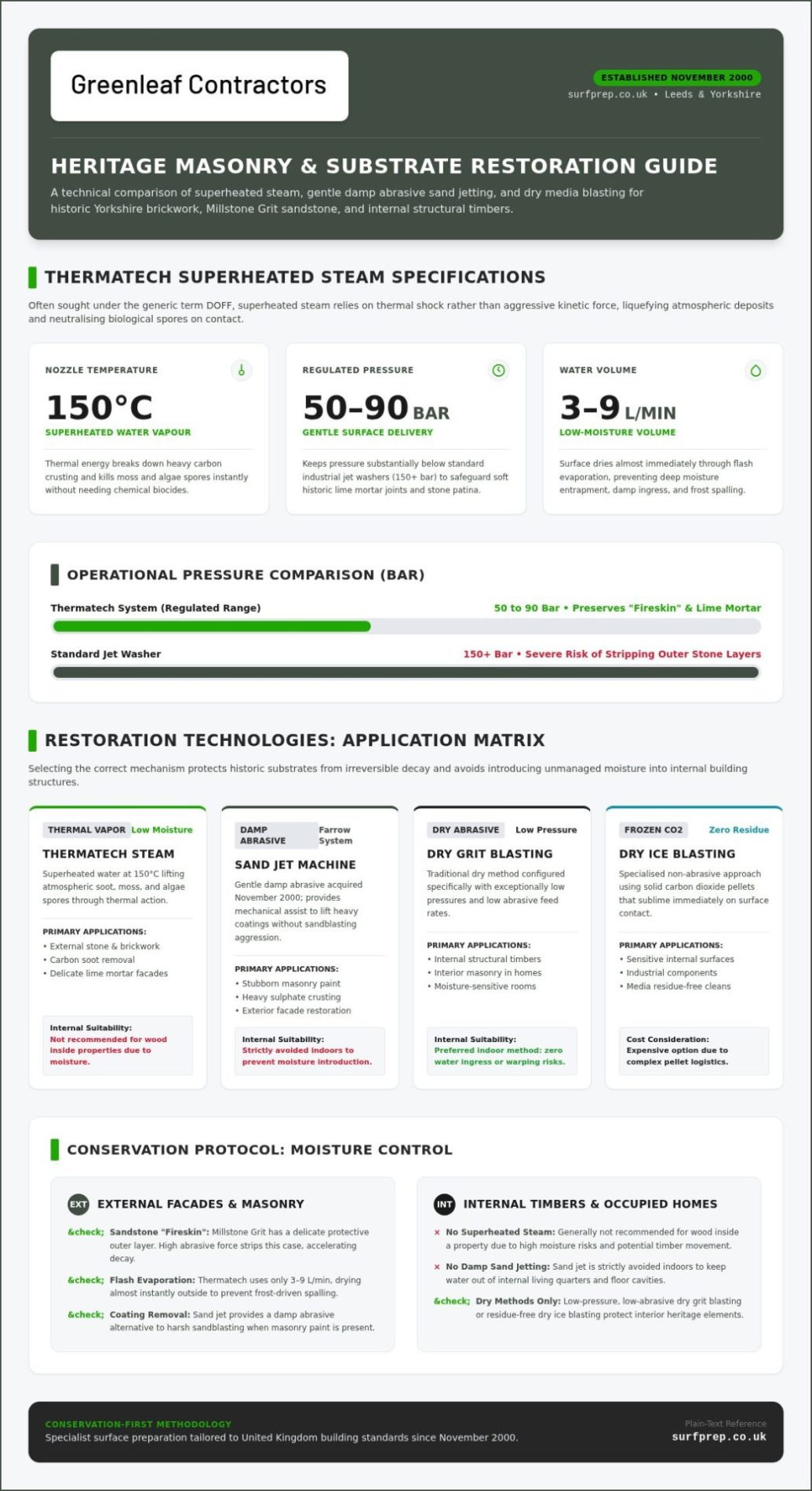
Superheated steam cleaning is a sophisticated restoration process where water is heated to 150°C at the nozzle. It doesn’t rely on the brute force of high pressure to strip surfaces. Instead, it uses thermal shock to liquefy and lift contaminants. For property owners seeking doff steam cleaning leeds, we specifically utilise the Thermatech system. This equipment offers the digital temperature and pressure regulation necessary to protect the unique architectural fabric of the city. Whilst standard jet washers often operate at upwards of 150 bar, Thermatech keeps pressures low, typically between 50 and 90 bar. This prevents water from being forced deep into porous masonry. It’s vital for preserving the integrity of historic Leeds brickwork and soft lime mortar joints.
This method is exceptionally effective at removing atmospheric grime, biological growth, and carbon crusting. It kills moss and algae spores on contact without the need for harsh chemical biocides. It’s also a preferred choice for lifting certain masonry paints. Precision is everything in restoration.
Preserving the Integrity of Leeds Masonry
Much of Leeds is built from Carboniferous sandstone, or Millstone Grit. This stone is rugged but has a weathered outer case known as the fireskin. Using harsh abrasive and dry-ice blasting methods on external stone can destroy this layer. This leads to rapid spalling and decay. When we undertake stone cleaning for listed buildings in the city centre, we prioritise Thermatech’s low-moisture delivery. By using only 3 to 9 litres of water per minute, the surface dries almost instantly through flash evaporation. This prevents the moisture entrapment that often triggers damp issues or frost damage in porous Leeds masonry. Since November 2000, we’ve focused on these non-destructive methods to ensure your building’s aesthetics are restored without sacrificing its structural future.
Comparing Restoration Methods: Thermatech vs Sand Jet vs Dry Ice Blasting
When evaluating options for doff steam cleaning leeds, it’s essential to recognise that superheated steam has its limits. Whilst Thermatech is ideal for biological growth and light atmospheric soiling, stubborn layers of old masonry paint or heavy carbon crusting often require a mechanical assist. This is where our sand jet machine, originally acquired as a Farrow System in November 2000, excels. It provides a gentle, damp abrasive action that lifts heavy coatings without the aggressive impact of traditional sandblasting. This approach aligns perfectly with Historic England’s stone conservation guidance regarding sensitive masonry treatments.
Choosing the Right Method for Your Leeds Project
Whilst many search for doff steam cleaning leeds to solve every facade issue, an honest specialist knows when to pivot to a different technology. Selecting the correct approach depends on the contaminant and the building’s location. We use a clear decision framework to ensure material safety:
- Thermatech Steam: Gold standard for moss, algae, and carbon soot on external stone or brick.
- Sand Jet: The preferred choice for sand jet cleaning of external paint or heavy sulphate crusting.
- Dry Ice Blasting: A specialized, non-abrasive method using frozen CO2 pellets. It’s an expensive but residue-free option for sensitive industrial or internal surfaces.
For internal structural timbers or masonry in occupied Leeds homes, we strictly avoid moisture. Superheated steam and the damp sand jet are never recommended indoors due to the risk of moisture ingress, mould blooms, and timber warping. Instead, we utilise traditional dry grit blasting at exceptionally low pressures or dry ice blasting. Dry ice is a premium method that leaves zero secondary media residue, though it remains an expensive option due to complex pellet logistics. If you’re unsure which method fits your property, get in touch for a specialist assessment.
Selecting a Specialist for Leeds Property Restoration
Experience isn’t just a number of years; it’s the ability to foresee how a material will react before the trigger is pulled. Since our founding in November 2000, we’ve navigated the complexities of Yorkshire’s heritage fabric with a focus on long-term preservation. When you search for doff steam cleaning leeds, you need more than a machine operator. You need a contractor who provides transparent risk assessments and understands the nuances of Leeds City Council listed building guidelines. We pride ourselves on being “Honest Specialists.” This means we won’t sell you a steam clean if your building requires a different approach. If superheated steam risks introducing moisture into your internal timbers or porous brickwork, we’ll recommend dry grit blasting or dry ice instead. This integrity protects your property’s value by preventing the structural decay caused by trapped moisture and carbon buildup.
Local Expertise Across West Yorkshire
Our process starts with a thorough site survey to identify the specific sandstone or brick type. From the initial assessment to project completion, we ensure every step adheres to heritage standards. Neglecting professional maintenance can lead to costly damage repairs that far outweigh the cost of a sensitive clean. Following a guide for professional brick cleaning in Leeds helps you avoid these pitfalls. Whether you’re restoring a city centre landmark or a residential terrace, we provide the technical precision required. Contact our Leeds team today for a specialist consultation tailored to your property’s unique requirements.
Secure the Future of Your Leeds Heritage Property
Restoring a historic facade requires more than just superheated water; it demands a technical understanding of the substrate itself. Whether you’ve been researching doff steam cleaning leeds for biological growth or require the gentle abrasive power of our sand jet for heavy paint removal, the priority remains the same: preserving your building’s integrity. Since November 2000, we’ve served as honest specialists across Leeds, York, and the wider Yorkshire region. We ensure every project receives the specific method it needs, rather than a one-size-fits-all solution. By choosing a partner that understands the risks of moisture in internal wood and the delicacy of Yorkshire gritstone, you safeguard your property’s value for the long term.
Ready to see the potential in your masonry? Get a Specialist Quote for Your Leeds Restoration Project today. We’re here to help you achieve a clean, damage-free finish that lasts.
Frequently Asked Questions
Is Doff or Thermatech steam cleaning safe for all Leeds buildings?
Thermatech superheated steam is exceptionally safe for most external Leeds masonry, including delicate gritstone and historic brickwork, because it relies on heat rather than abrasive force. However, it isn’t a universal solution. We don’t recommend it for internal works or surfaces where moisture entrapment might cause structural issues. As specialists since November 2000, we assess every project to ensure doff steam cleaning leeds is the appropriate choice for your substrate.
How much does dry ice sandblasting cost compared to steam cleaning?
Dry ice blasting is a premium service that is significantly more expensive than superheated steam cleaning. This is due to the high cost of liquid CO2 pellets and the complex logistics of cryogenic storage. Whilst steam cleaning is our standard restorative method for external facades, dry ice is typically reserved for sensitive internal projects or industrial machinery where leaving zero secondary residue is worth the higher mobilisation costs.
Can you use superheated steam to clean internal wooden beams?
We strictly advise against using superheated steam for internal wooden beams, particularly in occupied homes. The high moisture content can cause historic timber to swell, warp, or develop mould blooms once water is trapped inside the grain. For internal wood restoration, we prefer traditional dry grit blasting at low pressures or dry ice blasting. These methods achieve a clean finish without the risks associated with moisture.
What is the difference between sand jetting and traditional sandblasting?
Our sand jet machine, originally acquired as a Farrow System in November 2000, is a gentle alternative to traditional sandblasting. Unlike aggressive dry blasting that can pit stone, the sand jet uses a low-pressure vortex of fine abrasive enveloped in a water veil. This damp process eliminates dust and protects the masonry’s weathered surface. Because it introduces water, we only use this method for external restoration projects.
