
Could your attempt to fix a slippery entrance actually be causing permanent structural damage? It is a common worry for anyone responsible for maintaining Yorkstone or Portland stone, especially when learning how to clean stone steps that have become a treacherous hazard due to algae and grime. You have likely noticed those persistent black spot lichens that refuse to move regardless of how hard you scrub, yet the fear of eroding the delicate surface often stops you from taking further action.
We understand that you want your masonry to look original rather than stripped or damaged. This guide provides the definitive professional checklist on how to restore your entrance safely, drawing on the technical expertise we have built since November 2000. We will walk you through the proper use of superheated steam systems like Thermatech, also known as DOFF, and our specialised sand jet machine, which serves as a gentle alternative to traditional sandblasting. You will also learn how to identify the right restoration methods for your specific environment and how to keep that regrowth from returning.
Key Takeaways
- Understand why stone porosity and ‘breathing’ are vital to avoid trapping moisture or causing internal damage during the restoration process.
- Learn how to clean stone steps by following the professional survey checklist we use to identify structural cracks and friable stone before any work begins.
- Discover the technical difference between a natural, protective patina and damaging carbon crusting or persistent black spot lichen.
- Explore why we recommend superheated steam systems like Thermatech (also known as DOFF) as the industry standard for achieving a 100% biological kill at low pressure.
- Recognise when to use the damp, gentle abrasive process of our sand jet machine to safely remove stubborn paint or heavy carbon staining from outdoor masonry.
Assessing Your Stone Steps: Porosity, Patina, and the Risks of DIY Cleaning
Stone isn’t just a solid, inert block; it’s a porous material that actively breathes. When you’re considering how to clean stone steps, it’s vital to realise that surface dirt is usually just the tip of the iceberg. A natural patina, which is the gentle weathering that gives heritage stone its character, is often worth preserving. However, this is very different from carbon crusting or organic infestations like black lichen. These growths don’t just sit on the surface; they root themselves into the stone, trapping moisture and causing gradual decay.
We’ll offer an honest expert admission here: whilst a quick DIY scrub with a stiff brush is perfectly fine for removing daily dust or loose mud, it won’t solve the underlying problem. Domestic cleaning methods cannot reach the biological spores embedded deep amongst the masonry pores. For heritage or listed buildings, a professional assessment is essential before you apply any moisture to the steps, as incorrect techniques can lead to irreversible damage. Our approach to stone cleaning, refined since November 2000, always begins with identifying the specific material and its current state of health.
Identifying Local Stone: From Yorkstone to Portland
The geological makeup of your steps dictates the restoration path. Yorkstone, which we see frequently across Leeds and York, is a resilient gritstone, but its layered structure makes it prone to trapping moisture if the surface becomes choked with grime. This contrasts sharply with the softer limestones like Portland stone found in many UK city centres. Because these stones react differently to heat and abrasion, we tailor our pressures and temperatures to ensure the stone’s integrity remains intact. A “one size fits all” approach simply doesn’t work in professional Exterior building cleaning.
The Hidden Dangers of Domestic Pressure Washers
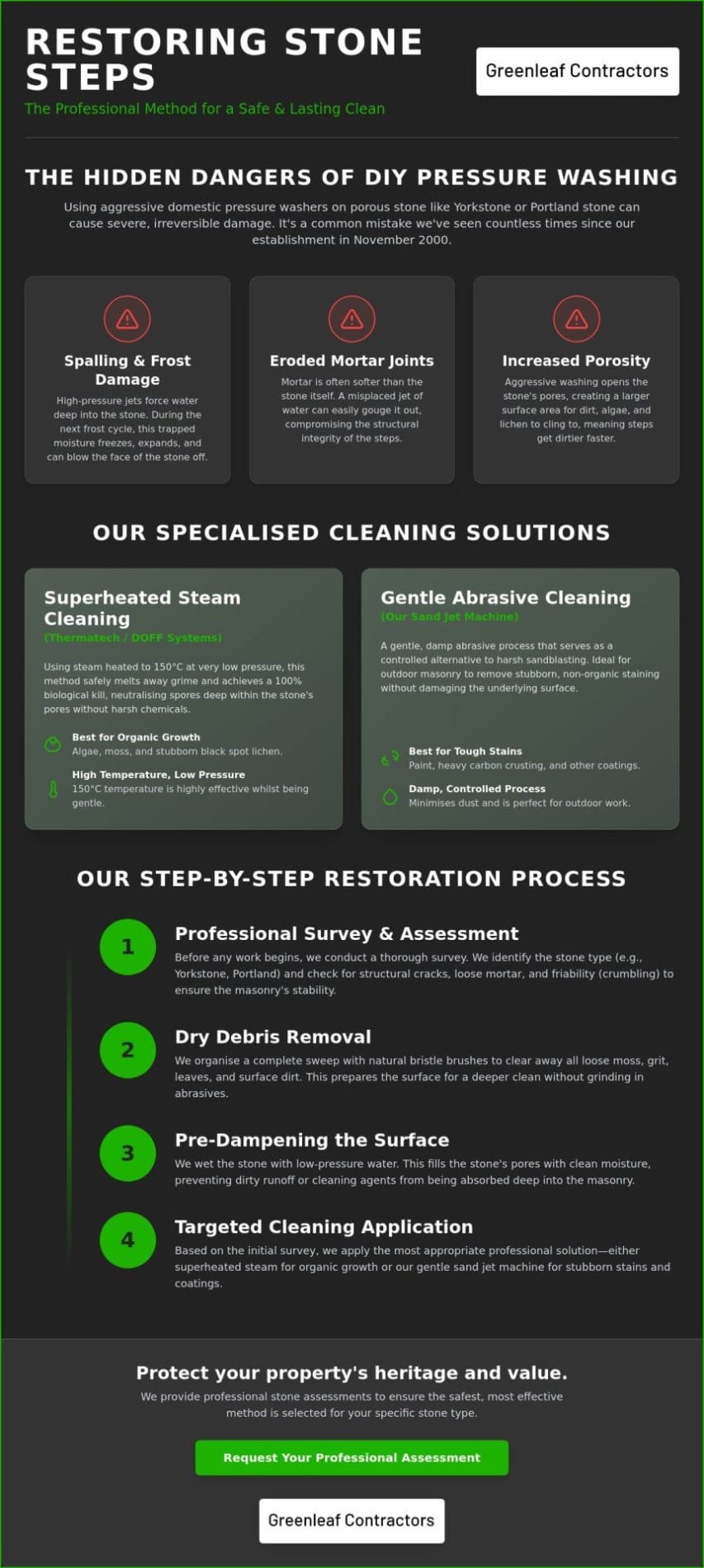
The most common mistake we see is the use of aggressive domestic pressure washers. High-pressure jets can cause ‘spalling’, a condition where water is forced so deep into the stone that the face literally blows off during the next frost cycle. Furthermore, aggressive washing opens up the stone’s pores, effectively creating a larger surface area for dirt and algae to cling to, meaning your steps will get dirty even faster next time. There is also a significant risk to the mortar joints, which are often softer than the stone itself and can be easily gouged out by a misplaced jet of water. This is why we often recommend our sand jet machine or superheated steam as a far safer, controlled alternative.
The Ultimate Stone Step Restoration Checklist: A Step-by-Step Guide
When we approach the question of how to clean stone steps, we follow a methodical restoration checklist that prioritises the stone’s long-term health over a quick, temporary shine. Before any water or cleaning agent touches the surface, we conduct a thorough initial survey. We’re looking for loose mortar joints, structural cracks, and signs of friability (the tendency of the stone to crumble or delaminate when touched). If the masonry is already failing structurally, even low-pressure cleaning requires extreme caution to avoid further loss of material.
Once the survey is complete, the physical work begins with dry debris removal. We organise a thorough sweep using a natural bristle brush to clear away loose moss, grit, and surface dirt. Whilst general advice on how to clean a stone surface often starts with simple soap and water, professional exterior restoration requires a pre-dampening stage. By wetting the stone with low-pressure water first, we fill the pores with clean moisture; this prevents any subsequent cleaning agents or dirty runoff from being sucked deep into the masonry. If you’re concerned about the condition of your entrance, we can provide a professional stone assessment to ensure the safest method is selected for your specific stone type.
Dealing with Organic Growth: Algae, Lichen, and Moss
Black spot lichen is a particular nuisance for UK homeowners because it roots itself into the stone’s microscopic pits. Standard “off-the-shelf” cleaners usually only bleach the surface, leading to regrowth within weeks. To achieve a 100% biological kill, we utilise superheated steam at 150°C (Thermatech or DOFF technology). This temperature neutralises the spores deep amongst the stone without the need for harsh chemicals that might alter the stone’s natural colour.
Safety and Slip Resistance amongst Weathered Masonry
The primary safety goal is clearing the “slime” (the thin film of algae and bacteria) that makes steps treacherous in the rain. A professional clean restores the natural “grip” of the stone by removing this organic lubrication. We always conclude with a final low-pressure rinse to ensure no residue remains that could affect the stone’s pH balance, leaving the surface clean, safe, and original in appearance.
Ensuring safety across all your property’s exterior surfaces is vital; for those with resin-bound paths or entries, the experts at Regal Group offer specialised advice on maintaining these modern finishes alongside your traditional stone.
Professional Solutions: Thermatech Steam and the Sand Jet System
When basic scrubbing fails to shift decades of neglect, professional equipment becomes the only viable route to a deep, lasting restoration. Understanding how to clean stone steps at a specialist standard involves selecting the right tool for the specific contaminant, whether that’s stubborn organic growth or heavy carbon staining. Our work across Leeds, Hull, and Manchester has consistently shown that preserving original masonry features not only restores safety but significantly boosts property value by maintaining the building’s historical integrity.
We prefer damp processes for all outdoor stone restoration work. By using water to encapsulate dust and debris, we manage the site environment effectively and protect neighbouring properties from airborne particles. This methodical approach ensures that the restoration is as clean as the final result, allowing us to work in busy city centres or quiet residential streets with minimal disruption.
Why Thermatech (DOFF) is the Gold Standard for Masonry
Thermatech, which many clients recognise by the industry term DOFF, uses superheated steam at temperatures reaching 150°C. This intense heat melts away wax, oil, and organic matter almost instantly. Because it operates at very low pressure, it protects the stone’s delicate face from the mechanical damage often caused by standard high-pressure washing. This method is frequently a mandatory requirement for cleaning Bath stone buildings and listed properties. It’s a chemical-free, eco-friendly option that leaves the masonry sterile and original in appearance.
The Sand Jet Machine: Gentle Restoration for Outdoor Steps
For more aggressive challenges like old paint layers or thick carbon crusting, we utilise our sand jet cleaning machine. Originally acquired as a Farrow System in November 2000, this technology uses a precise air-water-abrasive mix that is far gentler than traditional sandblasting. We’ll be honest: whilst steam is excellent for biological growth, it often won’t touch heavy industrial soot. That’s where the sand jet excels, providing a controlled way to peel back layers of grime during stone cleaning without pitting the surface. If your entrance requires specialist attention, contact our specialists for a site survey to determine the most effective restoration path for your stone type.
Restoring Your Entrance with Professional Precision
Restoring stone steps is about more than just aesthetics. It’s about preserving the structural integrity of your property’s entrance. We’ve explored why understanding stone porosity and identifying structural friability are the essential first steps before any work begins. By choosing a professional approach that prioritises a 100% biological kill through Thermatech or the gentle abrasive power of a sand jet machine, you ensure your masonry stays protected from future decay.
Whether you’re managing a listed building in York or a period terrace in Leeds, knowing how to clean stone steps correctly prevents the common pitfalls of aggressive pressure washing. We’ve provided these specialist services since November 2000. This brings over 25 years of masonry restoration expertise to every project across Hull and the wider North. Our team focuses on delivering honest advice and technical solutions that respect the age and material of your stone.
Just as specialist equipment is needed for stone restoration, precision tools are required for modern electronics. For those based in the capital looking for technical help, you can explore iPhone Screen Repair to ensure your mobile devices receive the same level of professional attention as your property.
If you’re ready to remove years of grime and restore the natural grip of your entrance, Request a Professional Stone Cleaning Quote from Surfprep today. We’re here to help you achieve a safe, clean finish that looks exactly as it was intended.
Frequently Asked Questions
Can I use bleach to clean my stone steps?
We strongly advise against using household bleach on natural masonry. Whilst it may provide a temporary whitening effect, it often leaves behind harmful salt deposits that can lead to efflorescence or react with the minerals in the stone to cause permanent staining. It’s far safer to use a pH-neutral cleaner or superheated steam to ensure the stone’s chemical balance remains undisturbed.
Will a pressure washer damage my Yorkstone steps?
High-pressure domestic washers are one of the most common causes of masonry damage we see. The aggressive jet can force water deep into the stone’s natural layers, causing the surface to ‘blow’ or delaminate during the next frost cycle. When considering how to clean stone steps made of Yorkstone, we always recommend low-pressure systems that rely on heat rather than mechanical force to lift the dirt.
How do I stop green algae from coming back on my stone sills?
Preventing regrowth requires a total biological kill of the spores embedded in the stone’s pores. Cold water cleaning often leaves these spores intact, allowing algae to return within weeks. By using superheated steam systems like Thermatech or DOFF, we neutralise the growth at the root, which keeps the surface cleaner for much longer than traditional scrubbing or chemical washes.
Is it safe to clean stone steps in freezing temperatures?
It is not safe to clean masonry when the temperature is likely to drop below freezing. Any moisture introduced into the porous stone will expand as it turns to ice, which can cause internal cracking and structural failure. We always plan our restoration projects for periods of stable, milder weather to allow the stone to dry out thoroughly after the cleaning process is complete.
