
A high-pressure jet wash is often the quickest way to permanently devalue a historic property. While it’s tempting to blast away the black carbon crusts and green algae that mask your facade, these aggressive methods often strip the protective face of the stone, leading to accelerated decay. When cleaning Bath stone buildings, the priority must be a balance between aesthetic restoration and structural preservation. Since we established our business in November 2000, we’ve focused on methods that respect the porous nature of limestone, ensuring that its famous honey-coloured glow is revealed rather than ruined.
You want a clean, original-looking exterior without the risk of “cowboy” operators causing irreversible damage. This guide details the safest, conservation-approved techniques for restoring delicate masonry. We’ll look at the benefits of superheated steam via the Thermatech system, often referred to in the industry as DOFF cleaning, and our specialised sand jet machine. Originally acquired as a Farrow System back in November 2000, this gentle abrasive provides a soft alternative to traditional sandblasting. It’s important to note that because this is a damp process, we don’t use it for indoor work; however, for external facades, it’s unmatched. By the end of this article, you’ll understand which chemicals to avoid and how to ensure your building remains healthy and breathable.
Key Takeaways
- Identify the unique properties of oolitic limestone and why standard jet washing causes irreversible surface scarring and “etching”.
- Explore the most effective techniques for cleaning Bath stone buildings, specifically using superheated steam at 150°C to lift pollutants gently.
- Compare advanced equipment like the Thermatech system (widely known as DOFF) and the sand jet for delicate external masonry restoration.
- Understand the regulatory landscape for Listed Buildings to ensure your restoration project complies with local conservation standards.
- Gain insights from specialists established since November 2000 on how to preserve the stone’s integrity whilst restoring its original aesthetic.
Understanding Bath Stone and Why Specialist Care is Critical
To understand the nuances of What is Bath Stone?, one must recognise it as a porous oolitic limestone. It’s prized for that warm, honey-coloured glow seen across Georgian terraces, but it’s fundamentally soft. Since we began our work in November 2000, we’ve seen how easily this material is misunderstood. When cleaning Bath stone buildings, you aren’t just washing a wall; you’re managing a delicate structure that reacts poorly to aggressive intervention. The stone’s open structure means it’s a “living” material that must remain breathable to stay healthy.
Atmospheric pollutants, particularly the black carbon crusts found in urban areas, do more than just ruin the aesthetics. They form an impermeable layer that traps moisture within the stone. Biological growth, such as algae and lichen, further complicates matters by holding dampness against the surface. If the stone cannot breathe, internal moisture levels rise, leading to structural instability. Our approach at Surfprep focuses on removing these harmful layers whilst preserving the stone’s natural ability to regulate moisture.
The Porosity Problem: Why Pressure is the Enemy
Standard high-pressure jet washing is a disaster for limestone. High pressure forces water deep into the stone’s pores, which is where the real trouble starts. When winter hits, this trapped water expands as it freezes, causing the stone to crack from the inside out. You’ll often see “spalling,” where the outer face of the block simply flakes away. This leaves the soft, unprotected core exposed to the elements, leading to permanent surface scarring and “etching” that no amount of repair can fully fix. If you’re concerned about avoiding these pitfalls, our detailed guide on how to clean limestone facades covers the safest methods for protecting your masonry from pressure-related damage.
Bath Stone in the North: From Leeds to Manchester
Whilst synonymous with the South West, Bath stone travelled far. It was frequently used for prestigious civic buildings and grand homes in Leeds, York, and Manchester during the 19th century. In cities like Hull and Bradford, the industrial legacy has left a unique challenge: heavy, stubborn soot deposits. These aren’t just surface dirt; they’re chemically bonded layers of history. Cleaning Bath stone buildings in these environments requires a specialist touch to lift decades of industrial grime without removing the historic patina. We’ve spent over two decades refining our methods to ensure these northern landmarks receive the same level of care as those in the Royal Crescent.
Professional Methods for Cleaning Bath Stone Safely
Restoring a facade requires more than just water; it demands a deep understanding of how specific technologies interact with mineral surfaces. When cleaning Bath stone buildings, we rely on specialised equipment that prioritises the stone’s longevity over speed. Many general contractors rely on “soft-washing” or biocides, but these often fail to address deep-seated carbon pollution or heavy organic growth without leaving chemical residues behind. Instead, we utilise superheated steam and gentle abrasives to achieve a superior finish.
It’s vital to distinguish between different surface preparation standards to avoid damage. Whilst you might see “Sa 2.5” mentioned in industrial contexts, this is a specific standard for cleaning metal and has no place in masonry restoration. Stone requires a far more nuanced, non-standardised touch that accounts for its varying density and age. Our team has refined these delicate processes since we established the business in November 2000, ensuring every project follows the gentle cleaning methods for limestone recommended by heritage bodies.
Superheated Steam: The Thermatech Advantage
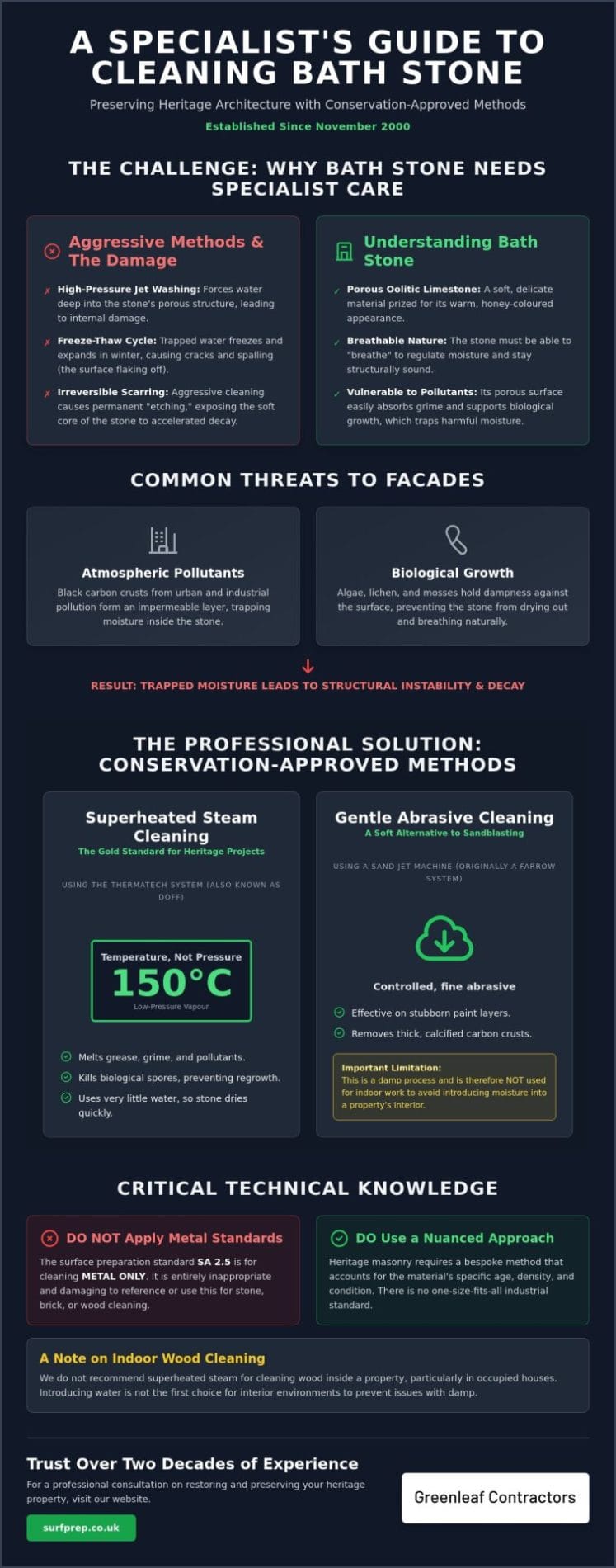
For most heritage projects, superheated steam is the gold standard. We prefer the Thermatech system, though many of our clients recognise this process by the industry term “DOFF cleaning.” This system is effective because it uses high temperature rather than high pressure to clean. By heating water to 150°C, the machine produces a low-pressure vapour that melts away grease, bitumen, and wax. It also kills biological spores on contact, which prevents algae from returning as quickly as it would after a cold-water wash. Because the volume of water used is very low, the stone dries quickly, significantly reducing the risk of internal dampness. The same principles that protect facades also apply when you need to clean stone steps safely using superheated steam, where algae and black spot lichens present similar challenges to those found on vertical masonry.
The Sand Jet: A Gentle Abrasive Alternative
Sometimes, steam isn’t enough to shift stubborn paint layers or thick, calcified carbon crusts. In these instances, we use our sand jet machine. Originally acquired as a Farrow System in November 2000, this technology provides a gentle alternative to traditional, destructive sandblasting. It mixes a fine abrasive with a low-pressure stream of water to “peel” away contaminants without bruising the underlying stone. Learn more about our sand jet cleaning services to see how this method handles tougher restoration challenges. We must admit that because this is a damp process, we don’t use it for indoor stone cleaning; it’s strictly an external solution to prevent introducing unnecessary moisture into your property’s interior. If you’re unsure which method fits your project, our team can advise on the most effective professional stone cleaning approach for your specific facade.
Planning Your Restoration Project: Regulations and Expertise
Successful restoration work involves more than just selecting a date and a contractor. It’s about navigating the statutory requirements that protect our national heritage. When cleaning Bath stone buildings, you must account for the legal framework surrounding listed properties. Since we established Surfprep in November 2000, we’ve guided many clients through these complexities, ensuring that every project respects both the stone and the law.
As an honest specialist, we believe in the “Expert Admission.” This means we’ll tell you if a specific method isn’t suitable, or even if the stone is too fragile to be cleaned at all. Sometimes, the safest course of action is to leave a surface alone if intervention risks structural loss. Our decades of experience allow us to make these calls with confidence, prioritising the long-term health of the masonry over a quick aesthetic result.
Listed Building Consent and Heritage Standards
If your property is Grade I, II*, or II listed, you’ll likely need Listed Building Consent from your local authority before any work begins. Local Conservation Officers play a vital role in this process; they ensure that the methods used, such as superheated steam via a Thermatech system, won’t damage the historic fabric. Proceeding without this consent can lead to legal penalties and expensive enforcement notices. You might find our Guide to paint stripping from listed building facades useful if your project involves removing old coatings alongside general masonry cleaning.
Selecting the Right Specialist in the North
Regional expertise is crucial for stone care in the North of England. Buildings in Leeds, York, and Hull face different environmental stresses compared to those in the South, including harsher freeze-thaw cycles and industrial soot legacies. When vetting contractors, don’t settle for generic “power washing” services. A true specialist will discuss specific equipment like the Thermatech machine (often referred to as DOFF by customers) or the sand jet. Always check for a proven history in heritage work; a company that’s been operating since November 2000 will have the portfolio to back up their technical claims. To ensure your facade is handled with the necessary precision, Contact Surfprep for a specialist stone assessment before you begin.
Protecting Your Property’s Heritage and Value
Restoring a historic facade is a long-term investment in your building’s health. We’ve explored how the porous nature of limestone makes it vulnerable to aggressive pressure, and why selecting conservation-approved methods is the only way to avoid permanent damage. Whether you are dealing with stubborn urban carbon crusts or organic biological growth, the right approach ensures your masonry can breathe whilst looking its best. When cleaning Bath stone buildings, technical precision is just as important as the equipment used.
Since November 2000, we’ve operated as specialist contractors, mastering the Thermatech system (often referred to as DOFF) and the gentle Farrow System sand jet. Our focus remains on heritage and listed building care, providing solutions that satisfy both property owners and conservation officers. Request a professional Bath stone survey from Surfprep to determine the safest restoration path for your project. Your property’s facade deserves a specialist touch that respects its history and ensures its future.
Frequently Asked Questions
Can I use household bleach to clean Bath stone?
No, you should never use household bleach on oolitic limestone. Bleach contains harsh salts that can become trapped within the porous structure of the stone, leading to a white, powdery residue known as efflorescence. This chemical reaction can cause permanent staining and even accelerate the breakdown of the stone’s surface over time. Instead, we recommend pH-neutral solutions or superheated steam when cleaning Bath stone buildings to lift biological growth safely.
How long does professional Bath stone cleaning take to complete?
The duration varies significantly based on the building’s size and the level of carbon build-up. A standard two-storey terraced house typically takes between one and three days to complete. For larger commercial projects or complex heritage restorations, the timeline may extend to several weeks. When cleaning Bath stone buildings, we provide a detailed schedule after our initial assessment to ensure minimal disruption to your daily operations.
Will cleaning my Bath stone facade increase my property value?
Restoring the original honey-coloured glow of your facade significantly enhances kerb appeal, which often positively impacts property value. Beyond the immediate aesthetic improvement, professional cleaning prevents the long-term decay caused by trapped moisture and pollutants. By maintaining the stone’s breathability and structural integrity, you’re protecting the asset’s future resale potential and avoiding the high costs associated with deep masonry repairs or stone replacement.
Is steam cleaning safe for the mortar joints between the stones?
Superheated steam is safe for mortar joints when applied by an experienced specialist using the correct pressure settings. Because the Thermatech system, often searched for as DOFF, relies on temperature rather than force, it doesn’t blast the mortar out of the joints. However, if the existing mortar is already failing or made of inappropriate cement-based mixes, the cleaning process may reveal these weaknesses. In such cases, we often advise repointing with traditional lime mortar. The same careful approach applies when tackling how to clean stone steps with deteriorating joints, where incorrect pressure can dislodge loose material and create a safety hazard.
