
What if the biggest risk to your building’s structural integrity isn’t the layers of old paint or grime, but the very method you use to remove them? Many property managers and homeowners delay essential restoration because they fear the invasive dust clouds and aggressive abrasion typical of industrial sandblasting. It’s a valid concern; nobody wants grit ingress in an occupied office or permanent scarring on heritage stone. Since we began in November 2000, we’ve focused on low-disruption surface preparation that respects both the material and the surrounding environment.
This guide explains how specialist Thermatech steam and sand jet systems provide a gentle, effective alternative for UK buildings. You’ll learn how to achieve a surface ready for repointing or painting whilst avoiding the mess of traditional methods. We’ll also clarify why certain damp processes are strictly for external use and when a dry approach is the only honest recommendation for your interior timber or occupied rooms. By the end, you’ll have the confidence to choose a method that protects your property’s character.
Key Takeaways
- Discover how superheated steam and damp-abrasive systems eliminate traditional dust clouds whilst protecting delicate heritage masonry.
- Learn why low-disruption surface preparation is the preferred choice for restoration projects in busy UK city centres and urban environments.
- Understand the vital distinction between external damp processes and internal dry methods to avoid moisture damage within your property.
- Gain professional insight into site management strategies and why even the cleanest specialist systems might require strategic containment.
Defining Low-Disruption Preparation for Masonry and Timber
In the context of UK building restoration, low-disruption surface preparation refers to specific methodologies designed to contain, suppress, or eliminate airborne particulates at the source. Traditional dry sandblasting, whilst effective for heavy industrial steel, is frequently unsuitable for city centres like Leeds or York. Local environmental and noise regulations often prohibit the vast dust clouds associated with dry methods, especially in high-traffic commercial zones. Since our establishment in November 2000, we’ve focused on techniques (like the damp-abrasive sand jet) that respect these constraints whilst delivering a clean finish.
The Importance of Cleanliness in British Building Restoration
Effective dust suppression is about more than just a tidy site; it protects neighbouring properties and the public in busy urban areas like Manchester, Hull, or Nottingham. Maintaining high standards of cleanliness ensures the longevity of lime mortars and breathable paints on historic facades by removing contaminants that prevent proper bonding. Adhering to fundamental building restoration principles is key to a successful project.
Preserving material integrity is the absolute priority for stone cleaning in heritage environments because aggressive cleaning can strip away the stone’s protective fireskin and lead to rapid moisture-driven decay.
Specialist Methods: Thermatech Steam and Sand Jet Systems
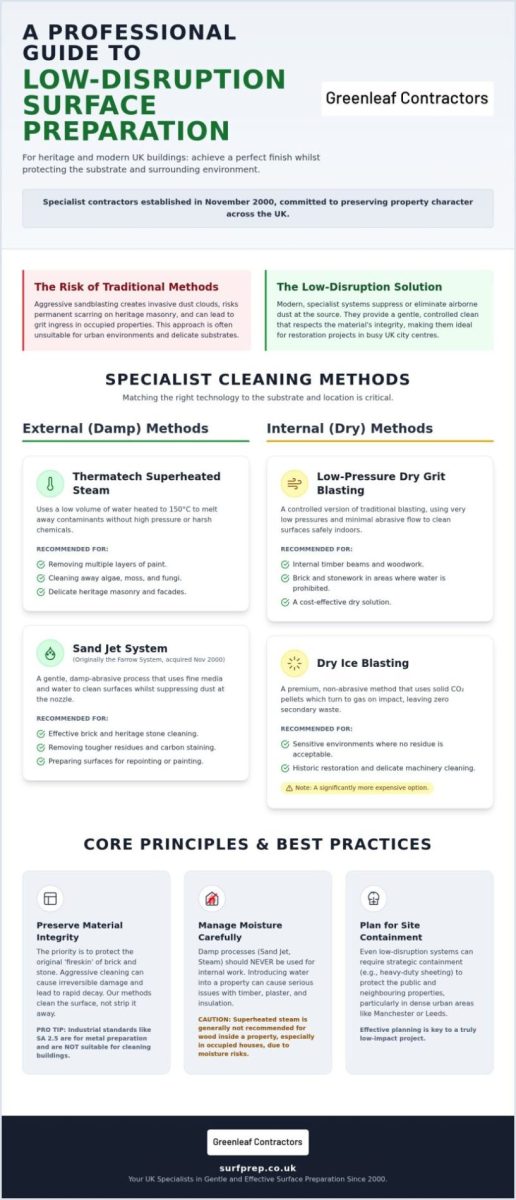
Effective low-disruption surface preparation relies on matching the right technology to the specific environment. For external facades, the Thermatech superheated steam system is a standout. It reaches temperatures of 150°C to melt away layers of paint and biological growth without the need for high pressure or aggressive chemicals. Because it uses such a low volume of water, it produces zero dust. For tougher residues, the sand jet machine (originally the Farrow System we acquired in November 2000) offers a gentle, damp-abrasive solution. It’s particularly effective for brick cleaning and heritage stone, adhering to masonry cleaning best practices by suppressing dust at the nozzle.
Internal works require a different logic. Whilst the sand jet is excellent outdoors, it’s a damp process and shouldn’t be used inside to avoid introducing unwanted moisture into the building’s fabric. Similarly, superheated steam is generally not recommended for internal wood, especially in occupied houses, due to the risks of swelling or condensation. Instead, we utilise traditional dry grit blasting at very low pressures and low abrasive rates to maintain control. For sensitive internal tasks where residue must be non-existent, dry ice blasting is a premium, zero-residue option, though it’s important to note it carries a significantly higher cost profile.
Choosing Between Wet and Dry Restoration Processes
Selecting the right method depends entirely on the substrate and location. Weathered stone facades benefit from the sand jet cleaning system, whereas structural oak beams in a barn conversion usually demand a dry approach to protect the timber’s integrity. This tailored approach ensures low-disruption surface preparation that actually works. If you’re unsure which method fits your project, reach out to our team for an honest assessment of your building’s needs.
Site Management: Planning Low-Disruption Projects in the UK
Property location dictates the logistical strategy. Urban sites in Newcastle or Nottingham require significantly stricter dust control measures than an isolated rural barn conversion. Here is an expert admission: whilst we aim for low-disruption surface preparation, some methods still require specific containment, such as heavy-duty sheeting, to be truly effective. It is about managing expectations and ensuring the surrounding environment remains pristine, even when using advanced equipment.
When preparing a site for internal dry grit blasting, a methodical approach to protection is essential. Follow this site preparation checklist to ensure a clean result:
- Seal all internal doorways and vents with industrial-grade polythene.
- Protect flooring with hardboard or reinforced protective sheeting to prevent impact damage.
- Arrange mechanical ventilation to manage air quality during wood restoration.
Internal vs External Restoration Requirements
The technical approach to how to clean structural timbers in a barn conversion differs fundamentally from external brickwork. Professional contractors working on listed buildings in historic centres like Beverley or Lincoln prioritise material integrity over raw speed. We often see specifications that mistakenly include “Sa 2.5” standards. This is a metal-specific preparation standard and has no relevance to wood, brick, or stone. Including it in a masonry specification shows a lack of specialist understanding. Since we started in November 2000, we’ve focused on finding the correct balance between cleaning power and property protection, ensuring low-disruption surface preparation that respects the building’s history and the client’s peace of mind.
Restoring Property with Precision and Care
Choosing the right methodology is the difference between a successful restoration and permanent substrate damage. External masonry thrives with Thermatech superheated steam or the gentle damp-abrasive sand jet, whilst internal projects demand a strictly dry approach to protect structural timber. Since we were established in November 2000, our focus has remained on providing low-disruption surface preparation that balances thorough cleaning with environmental safety. Serving Leeds, York, Hull, and the wider UK, our team uses specialist equipment to ensure a clean finish without the traditional mess. We’re proud to act as an honest advisor, prioritising the right solution over a quick sale to ensure your property’s character is preserved. Enquire about our specialist low-disruption cleaning services today to discuss your project with a reliable veteran in the field. Your building restoration deserves a specialist touch that respects every brick and beam.
Frequently Asked Questions
Is low-disruption surface preparation truly 100% dust-free?
No method is entirely dust-free, but low-disruption surface preparation significantly reduces airborne particulates. Techniques like Thermatech steam or the damp-abrasive sand jet suppress dust at the nozzle rather than letting it drift. For internal projects in cities like Leeds or York, we often combine these systems with physical containment sheeting to ensure absolute cleanliness in occupied commercial or domestic properties. Maintaining such high standards is a priority for property owners, who may also look to professional firms like Pink Lady Cleaning Services to provide expert ongoing care for their interiors.
Can I use superheated steam to clean wooden beams inside my house?
We don’t recommend superheated steam for cleaning internal wooden beams, especially in occupied houses. The moisture introduced by steam can cause timber to swell or warp, whilst condensation risks damaging adjacent plasterwork. For internal wood restoration in heritage buildings across East Yorkshire, we prefer low-pressure dry grit blasting or dry ice blasting, as these methods avoid moisture-related risks entirely.
What is the best method for removing paint from old brickwork without making a mess?
The sand jet machine is the most effective way to remove paint from external brickwork whilst minimising environmental mess. This damp-abrasive system uses a precise mix of air, water, and media to peel away coatings without the vast dust clouds associated with dry blasting. It’s ideal for urban sites in Hull or Manchester where protecting neighbouring properties is an essential priority.
How much more expensive is dry ice blasting compared to traditional grit blasting?
