
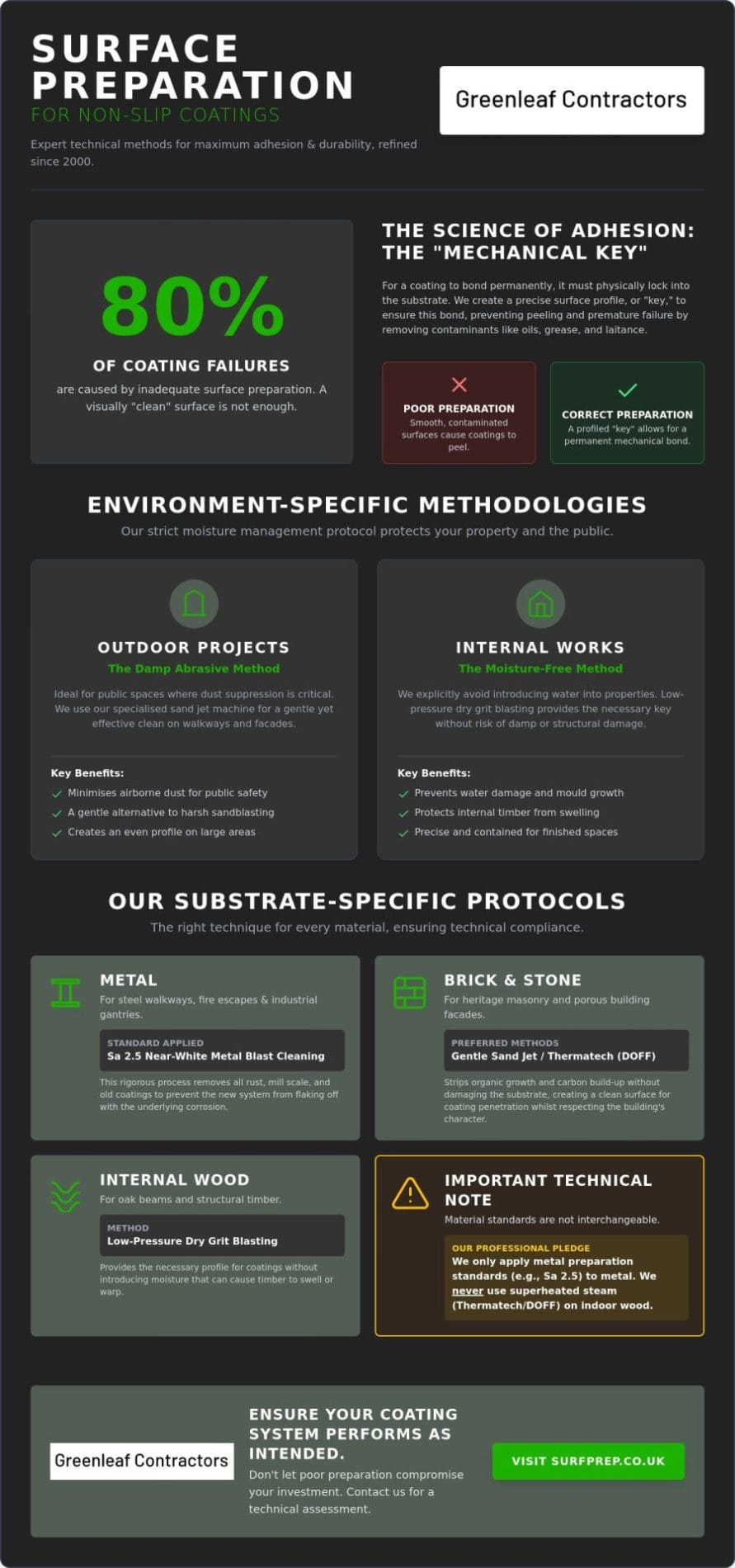
Did you know that 80% of all coating failures are caused by inadequate surface preparation? It is a staggering figure, especially when you consider the significant investment and operational downtime involved in applying safety systems. We understand the frustration of seeing a high-performance coating peel away just months after application because the surface preparation for non-slip coatings wasn’t handled with the correct mechanical profile. Since we established our business in November 2000, we have focused on being honest advisors, ensuring our clients don’t just get a clean surface, but one that is technically ready for the job at hand.
In this specialist guide, you will learn how to achieve maximum adhesion and long-term durability through expert substrate techniques. We will preview the essential mechanical methods for different materials, explaining why we prefer the damp process of our sand jet machine for outdoor work whilst sticking to low-pressure dry grit blasting for internal projects to avoid introducing moisture into your property. From using superheated steam systems like Thermatech (often referred to as DOFF) for masonry to achieving specific profiles on metal, our goal is to help you navigate the confusion and choose a method that ensures compliance without unnecessary mess.
Key Takeaways
- Understand why creating a mechanical “key” is essential to prevent coating failure and how to identify contaminants like oils and laitance that compromise bond strength.
- Learn our strict protocols for moisture management, including why we use the damp sand jet machine (originally the Farrow System) outdoors whilst favouring dry grit blasting for internal projects.
- Discover how professional surface preparation for non-slip coatings ensures long-term durability and compliance with UK slip resistance standards.
- Explore our “Expert Admission” process for selecting specific abrasive media and pressure settings tailored to your substrate’s unique requirements.
- Identify the most effective preparation methods for your environment, including when to utilise Thermatech (DOFF) systems and why we avoid moisture-heavy techniques indoors.
The Science of Substrate Profiling for Non-Slip Coatings
Many people assume that a surface that looks “clean” is ready for a new finish. In our experience, this is the most common reason for project failure. For any high-performance system to last, you must create a mechanical “key”. This is a specific level of surface roughness that allows the coating to physically lock into the substrate. Without this profile, surface tension can cause the liquid coating to bead or sit on top rather than bonding. Contaminants like oils, greases, and old laitance (that weak, dusty layer often found on concrete) act as a barrier that prevents a successful bond. We always prioritise mechanical surface preparation for non-slip coatings over chemical etching. Etching often leaves behind chemical residues that can react with the new coating, whereas mechanical methods provide a predictable, consistent profile for industrial longevity.
Different materials require vastly different approaches to achieve this key. For concrete, we often reference the SSPC-SP13/NACE No. 6 standard to ensure the surface is free of contaminants and possesses the correct texture. However, when we move to metal or stone, the technical requirements shift significantly to account for the material’s density and porosity.
Metal Surface Preparation and Sa 2.5 Standards
For steel walkways, fire escapes, and industrial gantries, we utilise the Sa 2.5 Near-White Metal Blast Cleaning standard. This is a rigorous process that removes mill scale, rust, and old paint until only slight shadows or streaks remain. Removing these oxides is critical; if you apply a slip-resistant epoxy over mill scale, the scale will eventually flake off, taking your expensive safety coating with it. We focus on achieving a consistent profile depth that provides the grip needed for heavy-duty industrial environments.
Preparing Porous Substrates: Brick and Stone
When we work on external brickwork or natural stone, the approach must be far more delicate. We use our sand jet machine (a system we have refined since November 2000) to provide a gentle alternative to traditional sandblasting. This method effectively strips away organic growth and atmospheric carbon that prevents non-slip coatings from penetrating the surface. It allows us to create the necessary bond without damaging the structural integrity or the aesthetic of heritage masonry, ensuring safety compliance whilst respecting the building’s character.
Choosing the Right Preparation Method: Damp vs Dry
Selecting the correct surface preparation for non-slip coatings isn’t just about the substrate; it’s about the environment. We’ve seen too many contractors use a “one size fits all” approach that leads to water damage indoors or excessive dust clouds outdoors. Since we started in November 2000, we’ve refined a strict protocol for moisture management. It ensures we achieve high levels of surface cleanliness and preparation without compromising the surrounding property. For deeper cleaning of masonry without saturation, we utilise Thermatech (the industry-recognised DOFF system) which uses superheated steam to lift contaminants whilst keeping moisture levels low.
Outdoor Preparation with the Sand Jet Machine
For outdoor areas like retail park walkways or concrete paths in city centres like Leeds and York, we prefer our sand jet machine. Originally acquired as the Farrow System, this technology uses a damp abrasive process. It is exceptionally effective for dust suppression in public spaces. It’s a gentle alternative to aggressive traditional sandblasting, allowing us to create an even profile across large areas without the mess associated with dry blasting in the wind. This method ensures your anti-slip system bonds perfectly to the clean, profiled concrete. For property managers working on larger structures in the region, our approach to industrial building facade cleaning in York follows the same material-safe principles to protect heritage brickwork and prevent moisture ingress.
Internal Floor and Beam Preparation
Internal works demand a shift in strategy. We explicitly avoid introducing water into a property, especially when preparing internal wooden beams or warehouse floors. For these environments, we use traditional dry grit blasting at low pressures and low abrasive rates. This provides the necessary key for non-slip coatings without the risk of moisture ingress or timber swelling. We never recommend superheated steam for indoor wood in occupied houses due to these moisture concerns. Whilst dry ice blasting is a viable alternative for sensitive equipment, it remains an expensive option for most standard projects. Managing dust in occupied buildings is our priority, and we use high-efficiency extraction to keep the site clean. If you aren’t sure which method suits your facility, you can speak with our specialist team for tailored advice.
Executing Professional Preparation for Maximum Coating Life
Achieving a durable finish requires a methodical workflow that prioritises technical precision over speed. We break down the process of surface preparation for non-slip coatings into four distinct stages to ensure every substrate is treated correctly. Our first step is always a thorough audit of the material and its contaminants. This is our “Expert Admission” phase; if we believe a specific coating won’t bond due to deep-seated oil saturation or structural damp, we’ll tell you. We’d rather lose a quick sale than provide a solution that fails within six months.
Once the substrate is identified, we move to Step 2: selecting the specific abrasive media and pressure settings. This varies significantly between a warehouse floor and a metal fire escape. Step 3 involves the mechanical removal of old, failing coatings and laitance to reveal a fresh, sound bonding surface. Finally, Step 4 is a rigorous inspection. We ensure the profile is consistent and the surface is entirely free of debris, making it ready for the application of safety coatings or line markings.
Common Preparation Mistakes to Avoid
One of the most frequent errors we encounter is the use of high-pressure water on delicate stone window sills or frames. This can cause irreversible “blown” faces on the masonry. Similarly, whilst “DIY” pressure washing might make a surface look clean, it often leaves behind invisible biofilms. These microscopic layers prevent the coating from “wetting out” the substrate, leading to premature peeling. For sensitive internal sites where water or excessive mess is prohibited, we recommend reviewing our guide on dust-free surface preparation methods to understand how we maintain a clean environment during restoration.
Specialist Services Across the North and Midlands
We are a well-organised operation capable of handling large-scale industrial projects across a wide geographic reach. Whether you are managing a facility in Manchester or a retail park in Newcastle, we bring the same level of grit and technical expertise to every site. Our commitment to transparency means we provide the right solution for your commercial curb appeal and safety requirements, not just the easiest one. If you need a reliable partner to ensure your safety systems stay down for the long term, contact our specialist team for a professional site assessment.
Securing Long-Term Safety Through Technical Precision
Our team has been refining these specialist techniques since November 2000. With technicians certified in Thermatech and DOFF systems, we bring a veteran’s eye to every project, from delicate heritage stone restoration to heavy-duty industrial steel preparation. High-quality surface preparation for non-slip coatings is a technical discipline that requires the right equipment and an honest assessment of the substrate’s condition. If you are ready to ensure your facility meets safety standards with a finish that lasts, we are here to help. Request a Professional Surface Preparation Quote today to discuss your project requirements. We look forward to delivering a safe, dependable result for your site.
Frequently Asked Questions
Can I apply a non-slip coating directly over old floor paint?
Applying a new finish over existing paint is a high-risk strategy because the new system’s adhesion depends entirely on the bond of the old layer. If the original paint fails or flakes, your surface preparation for non-slip coatings will have been in vain. We always recommend mechanical removal to expose the bare substrate, ensuring the new coating can create a permanent “key” with the material itself rather than sitting on a compromised surface.
What is the difference between Sa 2.5 and standard grit blasting for metal?
Sa 2.5 is a technical cleanliness standard specifically for metal, requiring the removal of nearly all mill scale, rust, and old coatings until only slight shadows remain. Standard grit blasting is a broader, less precise term that doesn’t guarantee a specific level of cleanliness or profile depth. For industrial steel walkways and fire escapes, adhering to the Sa 2.5 standard is essential to prevent the hidden oxidation that often causes safety coatings to fail prematurely.
How do you prevent dust when preparing an indoor commercial floor?
We manage dust in indoor commercial environments by using low-pressure dry grit blasting coupled with industrial-grade vacuum extraction systems. Since we don’t introduce water into internal spaces to avoid moisture damage, these dry methods are the standard choice for warehouse floors. This approach allows us to profile the surface effectively whilst keeping the surrounding area clean and operational for your staff, avoiding the mess of traditional, uncontained blasting.
Is superheated steam cleaning safe for all non-slip prep work?
Whilst Thermatech (often known as DOFF) is excellent for cleaning masonry and stone, it isn’t a universal solution for all surface preparation for non-slip coatings. We explicitly avoid using superheated steam on indoor wooden beams or floors in occupied properties because the moisture can cause the timber to swell or warp. In those cases, dry mechanical methods are far safer and more effective for achieving the required profile without risking the structural integrity of the wood.
