
The “gentle” steam clean you’ve seen used on stone facades could be the very thing that ruins your 17th-century oak beams. It’s understandable why you’d be cautious; you want to strip away decades of dark Victorian stain or grime without raising the grain or inviting rot by trapping moisture deep within the timber. This guide settles the debate on steam cleaning vs sandblasting for oak beams, showing you how to achieve a lightened finish without compromising structural integrity.
Drawing on our specialist expertise since November 2000, we’ll explain why our Thermatech system is best left for masonry. We’ll also discuss why the damp Sand Jet is an outdoor-only tool, whilst low-pressure dry grit blasting remains the safest choice for internal restoration. You’ll learn how to navigate these cleaning methods to ensure your property’s character is preserved, not processed, by choosing the right technique for your specific project.
Key Takeaways
- Understand the core differences between steam cleaning vs sandblasting for oak beams to select a restoration method that protects the timber’s delicate grain.
- Learn why damp processes like the Thermatech steam system and the Sand Jet are specialist tools for external work and shouldn’t be introduced into indoor environments.
- Discover how low-pressure dry grit blasting provides a safe, moisture-free alternative for internal beams, allowing for an immediate and thorough inspection of the wood.
- Evaluate the benefits of dry ice blasting for sensitive projects whilst weighing up the higher costs associated with this premium restoration service in the UK.
Comparing the Impact: How Steam and Sandblasting Affect Oak Timber
Since we established Surfprep in November 2000, we’ve seen how traditional Abrasive blasting can devastate historic timber. High-pressure systems using coarse media often “flog” the wood; this aggressive force tears at the soft summerwood between the harder growth rings, leaving a pitted, unnatural texture. Whilst this might work for industrial steel, it’s a disaster for historic oak.
When weighing up steam cleaning vs sandblasting for oak beams, many homeowners are drawn to steam as a “chemical-free” alternative. Our Thermatech system uses superheated water to lift layers of paint or wax, but oak is a sensitive, cellular material. It absorbs water like a sponge. “Gentle” is a relative term in our trade. In many cases, low-pressure dry grit blasting is far more precise than steam because it allows the operator to target specific areas without the collateral damage of moisture saturation.
The Science of Superheated Steam on Wood Fibres
The Thermatech system is a marvel of engineering, reaching temperatures of 150°C at the nozzle. This intense heat liquefies old lead paints and bitumen coatings, allowing them to be rinsed away without abrasive force. However, this process often results in “raising the grain.” As the wood fibres absorb the superheated vapour, they swell and stand up. Once the timber dries, you’re left with a fuzzy, rough surface that requires extensive sanding to rectify. For those seeking a crisp, original finish, our wooden beam cleaning specialists often recommend dry methods for interiors to avoid this moisture trap and the subsequent risk of rot or mould.
Internal vs External Cleaning: Navigating the Moisture Trap
When considering steam cleaning vs sandblasting for oak beams, the environment dictates the equipment choice. While external oak on a York townhouse or a timber-framed barn can withstand damp processes, internal timbers require a much stricter approach. We’ve operated since November 2000 and always maintain one crucial rule: damp processes must never be used inside a property. This includes the Sand Jet, which we originally acquired as a Farrow System back in our founding year. The risk of introducing water into a dry, settled building is simply too high.
The core risk in the steam cleaning vs sandblasting for oak beams debate is moisture entrapment. Thermatech systems produce significant water vapour. In an occupied house or a poorly ventilated period property, this moisture settles into the grain, potentially triggering wood rot or mould growth behind the surface. Whilst external timber has the benefit of natural airflow to dry out, internal beams don’t have that luxury. Using steam indoors can lead to long-term structural issues that are far more expensive to fix than the initial cleaning.
Why the Sand Jet is an External-Only Solution
The Sand Jet is a brilliant, gentle alternative for street-side work in centres like Leeds or Hull. It captures dust within a water envelope, preventing clouds of grit from affecting neighbours. However, the resulting wet slurry is incredibly messy. Cleaning this from a domestic lounge is nearly impossible. You can find the full technical specs on our Sand Jet cleaning page. If you’re planning an interior project, it’s better to opt for a dry method to ensure your wooden beam restoration project stays clean and moisture-free.
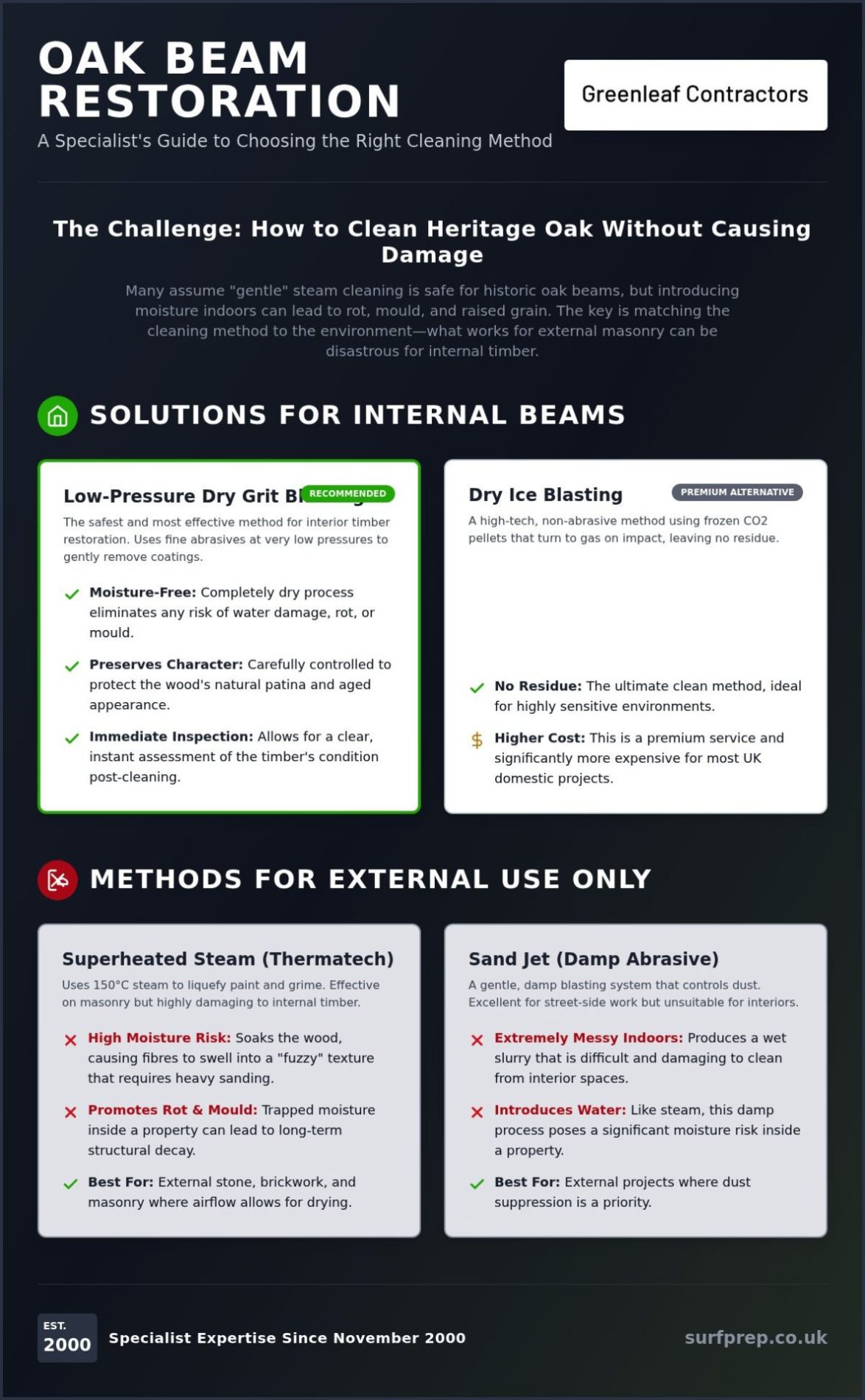
The Specialist Approach: Low-Pressure Dry Grit Blasting for Interiors
In the debate over steam cleaning vs sandblasting for oak beams, the interior environment demands a dry approach. We’ve refined our techniques since November 2000 to ensure that heritage timber is lightened without the structural risks associated with moisture. Our preferred method for internal oak is traditional dry grit blasting, utilising exceptionally low pressures and fine abrasives. Unlike the damp processes used externally, this dry method allows for an immediate inspection of the timber’s condition; it prevents any moisture-related warping or staining that can occur with steam.
Dry ice blasting is sometimes suggested as a “no-residue” alternative. It’s an effective process, but it remains a significantly more expensive choice for UK homeowners. For most domestic restoration projects, low-pressure grit blasting provides the best balance of cost and results. It’s a cleaner, more predictable alternative to chemical strippers, which often leave sticky residues or cause unsightly discolouration in the oak grain.
Achieving a Gentle Finish Without Water Damage
To ensure your entire home feels as refreshed as your newly restored beams, you can learn more about Carpet Cleaner In Manchester for professional carpet and upholstery cleaning services.
The process involves a methodical removal of centuries of limewash, soot, or modern gloss paints. By carefully adjusting the air-to-abrasive ratio, we preserve the patina (the aged character of the wood) rather than stripping it back to a raw, characterless state. We focus entirely on the aesthetic integrity of the wooden beams, ensuring the texture remains sympathetic to the building’s age. If you’re working on a larger project, you might find our guide on how to clean structural timbers in a barn conversion particularly useful for planning your restoration timeline.
Restoring the Character of Your Heritage Timber
Choosing between steam cleaning vs sandblasting for oak beams comes down to moisture control and precision. Whilst our Thermatech and Sand Jet systems are indispensable for external masonry and timber, they aren’t the right fit for your internal spaces. Protecting your home from moisture damage is our priority; that’s why we always recommend a dry, low-pressure approach for interior restoration to avoid grain damage or rot.
Since November 2000, we’ve served homeowners across Leeds, York, Hull, and the North with transparent advice and specialist equipment. We don’t sell services that risk the structural integrity of your property. Contact our restoration specialists today for an honest assessment of your oak beams and ensure your project is handled with the expertise it deserves. Your beams can look spectacular without the risks.
Frequently Asked Questions
Is steam cleaning safe for internal oak beams?
Superheated steam cleaning is generally not recommended for internal oak, particularly in occupied houses. Whilst our Thermatech system is an excellent tool for masonry, introducing high levels of moisture into old timber can lead to wood rot or mould growth. When comparing steam cleaning vs sandblasting for oak beams indoors, we always advise dry methods to protect the structural integrity of your building.
Will sandblasting make my oak beams look fuzzy or rough?
Traditional high-pressure sandblasting often “flogs” timber, tearing the soft grain and leaving a rough finish. Our specialist low-pressure dry grit blasting, which we’ve refined since November 2000, avoids this damage. By using fine abrasives and controlled airflows, we lighten the wood whilst preserving the original patina. This ensures your beams remain smooth and structurally sound rather than fuzzy or pitted.
How much does it cost to have oak beams professionally cleaned in the UK?
Professional cleaning costs in the UK vary significantly based on the timber’s surface area and the thickness of existing coatings. Whilst dry ice blasting is a premium, expensive option for sensitive heritage projects, low-pressure dry grit blasting is often the most cost-effective solution for domestic restoration. We provide bespoke assessments to determine the most efficient method for your specific property’s needs.
Can you remove black paint or limewash from oak without chemicals?
Centuries of black bitumen or limewash can be removed effectively without using harsh chemicals. Our dry grit blasting method physically lifts these coatings without leaving the sticky residue or unsightly discolouration often caused by chemical strippers. This approach is much cleaner for the property and allows us to achieve a natural, lightened oak finish that highlights the timber’s historic grain.
